Disability News Service, Resources, Diversity, Americans with Disabilities Act; Local and National.

Showing posts with label education. Show all posts

Monday, December 11, 2017

Quality Of Education Can Depend On ZIP Code For Students With Disabilities

The law says these students deserve to learn. In some districts, parents say that’s not happening.

Article By Rebecca Klein for The Huffington Post 12/09/2017                                                  
At the start of every school year, Jawanda Mast met with administrators at her daughter Rachel’s school. Every year, it was the same fight. Teachers wanted to separate Rachel ― who has Down syndrome ― from her peers without disabilities, and put her in a segregated class. Mast always pushed back. Isolating her daughter from her peers would have a devastating effect. Rachel was vivacious and social, and loved to be with her friends.

After years of having the same fight over and over, Mast made a hard choice right before Rachel was set to begin third grade. Mast and her family decided to leave their home in Tennessee for Kansas, where they could put Rachel into a school system that offered a better education and would include her in an integrated classroom. The family also made the move due to Mast’s husband’s job, but the education issues in Tennessee were a key factor.

“I was like, how on earth am I going to do this for 10 more years,” Mast said.

As a child with Down syndrome, Rachel is one of the small number of public school students in America with an intellectual disability. These children made up less than 2 percent of public school students in every state during the 2015-2016 school year. Experts estimate that up to 90 percent of students with disabilities can graduate high school meeting the same academic expectations as their peers. But parents and advocates say the other 10 percent are often assumed to be less capable than they are.

Just a few decades ago, students with disabilities faced high rates of institutionalization and were rarely included in typical classroom settings. In 1975, the Individuals With Disabilities Education Act ― originally called the Education for All Handicapped Children’s Act ― enshrined into law these students’ right to an appropriate public education.

Part of IDEA’s framework requires parents to advocate hard to get what they see as their children’s needs met. Often, school districts have different ideas about what would best serve a child. Decades later, this is still the case.

Sometimes teachers lack the best training for dealing with a student’s specific disability. Other times, administrators have low expectations for what these students can achieve.

While IDEA says students with disabilities should learn in the least restrictive environment ― meaning with non-disabled peers ― parents still often find themselves fighting hard, expensive battles for their child to be included.

Success can be a matter of luck. But it also depends on time and resources. For Mast’s daughter, those two factors were important.

The district in Tennessee where Rachel previously went to school never had a child with Down syndrome graduate with a high school diploma, Mast said. (Rachel’s elementary school was part of Shelby County Schools. Since she left, it split off and is now part of another district, Bartlett Municipal School District. Both districts deferred to the other for comment.)

Now, Rachel is 18 and set to graduate in May from her district in Olathe, Kansas. She will receive a full, regular diploma ― Kansas does not have diplomas specifically for students with disabilities ― and has plans to start at a community college or go to a four-year college with a special program for students with special needs.

The move to Kansas didn’t solve everything. Mast still had to fight for resources for her daughter. She said she is “exhausted from doing all I had to do to make sure she could be included.” But overall, it has been a positive experience. Rachel spends all day in general-education classrooms with her peers without disabilities, aside from a resource class where she gets special attention.

Mast isn’t alone in feeling that she had to move in order to get the proper support for her child. HuffPost spoke to four families of children with severe disabilities who say they either moved in order to get their child better services, or allowed their children’s educational needs to factor into a move. They all ended up in places where they feel their child’s unique and individual needs are met.

It’s a luxury not every family has.

Maryland parent Marjorie Guldan has a 14-year-old daughter with Down syndrome. She fought for years and went to court to stop her district from giving her daughter certain assessments.

The district needed these assessments in order to push Guldan’s daughter, Rebecca, into a graduation track specifically for students with disabilities. This track allows students to graduate with a certificate instead of a regular diploma. High school certificates don’t carry the same weight as diplomas ― they are not recognized by postsecondary institutions. Twenty-four states have diploma paths specifically for students with disabilities.

A judge eventually sided with the district, allowing it to give Rebecca the assessments that would make her eligible for the certificate track. Guldan said officials started pushing for this path when Rebecca was only in the third grade.

“My argument all along has been lets just keep pushing her and see where we get. If in the end diploma is not possible then I will happily accept the certificate,” Guldan said. “What I resented was, from third grade on, every year them saying she really should be on certificate, she can’t handle the grade-level work.”

District officials did not respond to requests for comment.

Guldan’s daughter now only spends a few classes a day with her peers without disabilities. The results have been mixed. Rebecca’s behavior has improved because she is less challenged by the curriculum and doesn’t act out as much in frustration. On the other hand, Guldan wants her daughter to be challenged.

“I fully expect her to be able to work in the community. Obviously she’s not going to be a lawyer or a doctor, but there are plenty of opportunities out there that we can be working towards preparing her for that are going to require high expectations,” said Guldan, whose other daughter graduated from the district.

Like Mast, Guldan considered taking her daughter out of the district to put her in a school that was more dedicated to inclusion. But for Guldan’s family ― like so many others ― picking up and leaving is simply not an option. It would be a financial burden, and Guldan has come to rely on her neighbors for help looking after Rebecca. They have developed a strong community. And Guldan’s other daughter loves her childhood home.

“Even I don’t know that fighting for a diploma is worth all the upheaval,” Guldan said.

But for families of students with disabilities, it’s an unfortunate dilemma that they’re sometimes forced to face.

Experts say these battles play out all the time. Ricki Sabia, senior policy adviser at the National Down Syndrome Congress, said she sees tremendous variability in how students are treated based place and situation.

“Even within a district can vary from school to school to school,” Sabia said.

Sabia has seen families move to a specific district to take advantage of its inclusive options, only to have the school principal leave and the culture change.
“People keep saying education shouldn’t depend on your ZIP code. It’s thrown around a lot in terms of kids in poverty, but it’s also true for kids with disabilities. It shouldn’t depend on your ZIP code,” she said.
This story was produced by The Hechinger Report, a nonprofit, independent news organization focused on inequality and innovation in education, in partnership with HuffPost. Read the whole series, “Willing, Able and Forgotten: How High Schools Fail Special Ed Students,” here. Sign up for our newsletter.
https://www.huffingtonpost.com/entry/students-disabilities-quality-education_us_5a2ac25be4b0a290f0503905

'Tolerating Low Expectations for Children With Disabilities Must End' A Commentary by Betsy DeVos

Dec. 2017 - Earlier this year the U.S. Supreme Court issued a unanimous decision. The justices ruled 8-0 in Endrew F. vs. Douglas County School District that Endrew, a child with autism, was entitled to an educational program that required more than the "de minimis"—or minimum—progress set by his assigned school.
This landmark decision was rightly hailed as a victory for the millions of children with disabilities and their families in America today. Too often, the families of disabled children have felt that their children are not being adequately challenged academically or given the support needed to grow and thrive.
Unfortunately, stories like the one in this case are not uncommon. Too many parents of children with disabilities see their son or daughter's individualized education program, or IEP, little changed from year to year. To these parents, it often seems as if the school district is content with simply passing their child along, rather than focusing on helping him or her progress and grow academically. They recognize that the de minimis standard isn’t working for their child, but, sadly, they often do not have the opportunity to access something better.
When it comes to educating students with disabilities, failure is not acceptable. De minimis isn’t either.
"When it comes to educating students with disabilities, failure is not acceptable."
That's why this week the U.S. Department of Education released a Q&A document to inform families, educators, and administrators of the impact of the court's decision on the implementation of the Individuals with Disabilities Education Act, or IDEA, and the scope of the free, appropriate public education, or FAPE, requirements under the law.
The court's decision gave legal weight to what so many parents and educators already knew to be true: In order to excel, each child must have an education program that is appropriately ambitious in light of his or her circumstances. Chief Justice John G. Roberts Jr.'s opinion emphasized the individualized decision-making required in the IEP process and the need to ensure that every child should have the chance to meet challenging objectives.
No two children are the same. Each has his or her own unique abilities and needs. Personalized, student-centered education can help all children thrive, especially children with disabilities. Their education should embrace their diverse traits and aspirations, rather than limiting them with a one-size-fits-all approach.
Student success requires we put each child at the center of everything we do. Low standards and de minimis expectations tell our students that we don’t have hope for them. That we don't believe in them. But we do. Tolerating low-expectations for children with disabilities must end. Challenging children with disabilities empowers them, and doing so gives them the hope of living successful, independent lives.
Every student should be loved and respected, and with our help, they can gain the tools to grow and become everything they want to be.
Every family should have the ability to choose the learning environment that is right for their child. They shouldn’t have to sue their way to the U.S. Supreme Court to get it. Thanks to the Court’s landmark unanimous decision, other families won’t have to.
SOURCE: U.S. Department of Education

Wednesday, November 29, 2017

In Madison Wis. Nearly 9 Percent of Students with Disabilities Restrained or Secluded in 2016-17 School Year

A report released this fall by the Madison Metropolitan School District said nearly nine percent of students with disabilities were restrained or secluded by staff during the last school year.

solid article by Amber C. Walker for The Cap Times | Nov 28, 2017                                             
The report showed that 334 of the 3,804 students with disabilities, or 8.8 percent, experienced restraint and/or seclusion during the 2016-2017 school year. That number is up from 5.6 percent in the 2015-2016 school year.

The number was disproportionately high at Landmark Elementary Alternative Program (LEAP) West, a program at Olson Elementary School for students with emotional-behavioral disabilities. LEAP West reported 737 incidents of restraint and/or seclusion among 10 students last school year.

MMSD’s report shows restraint and seclusion practices vary widely among schools, with some schools reporting less than five incidents and others reporting hundreds during the last school year. While some were troubled by the numbers, a national expert said MMSD’s training is in line with best practices around the country.

State law defines physical restraint as “a restriction that immobilizes or reduces the ability of a pupil to freely move his or her torso, arms, legs, or head,” and seclusion as “the involuntary confinement of a pupil, apart from other pupils, in a room or area from which the pupil is physically prevented from leaving.”

Wisconsin prohibits the use of mechanical restraints, or equipment meant to immobilize students.

Superintendent Jennifer Cheatham said in an emailed statement to the Cap Times that MMSD is committed to “inclusive education” and aims to decrease the use of restraint and seclusion in the district.

“When it comes to restraint and seclusion, my priority is to minimize its use to only when it is absolutely necessary to maintain safety,” Cheatham said.

Overall, 529 students, about 2 percent, were restrained and/or secluded in the 2016-2017 school year in 3,158 incidents across the district.

Restraint and seclusion occurrences were also high at Schenk Elementary School, with 32 students (12 with disabilities and 20 without) experiencing 288 occurrences of restraint and/or seclusion last year.

The highest number of incidents occurred in elementary schools, with 2,975 reports of restraint and/or seclusion among 405 students. Elementary schools account for over 94 percent of restraint and/or seclusion incidents.

Middle schools reported 99 occurrences of restraint and/or seclusion among 51 students. High schools reported 84 incidents among 73 students.

Although the restraint and seclusion report makes the distinction between students who have a disability and those who do not, it does not separate the data by race. The Cap Times has requested a more detailed report from MMSD.

Madison School Board vice president Anna Moffit said she is “deeply troubled” by the restraint and seclusion numbers, particularly in the alternative programs.
“Students of color, many of whom have already experienced significant trauma, are the primary recipients of these unjust methods,” Moffit said. “The use of exclusionary practices within our district, which includes physical force against our youngest, will only exacerbate the trauma of our most marginalized students. As a district, we must do better.”
Wisconsin districts are required to report to their school boards how often students are restrained and secluded each year.

In 2014, ProPublica found that underreporting of restraint and seclusion is common. Its research concluded that one-third of school districts did not report any use of restraint and/or seclusion in the 2011-2012 school year. ProPublica's analysis said that incidents of restraint and/or seclusion were used 267,000 times in the 2011-2012 school year, with MMSD accounting for 765 of those incidents.

MMSD’s restraint and seclusion report said the district had reduced incidents across the district by almost 11 percent since the 2015-2016 school year. The 2016-2017 school year marks the first time MMSD saw an overall reduction in the trend since 2012.

“We are pleased to see a decrease in our numbers, and will continue to work with staff, provide training and ensure those numbers keep going down,” Cheatham said.

While cases were down overall, the number of times students were restrained in elementary schools increased by 50 cases, up to 1,502 incidents from 1,452 in the 2015-2016 school year.

Madison School Board member Nicki Vander Meulen said in a statement emailed to the Cap Times that “the use of seclusion and restraint in public schools should only be used as a last resort… this is why the Behavior Education Plan needs to be reworked with a focus on positive interventions instead of punishment.”

MMSD implemented its Behavior Education Plan in 2014. The BEP aimed to reduce exclusionary discipline practices in favor of restorative approaches to school discipline by helping students understand behavioral expectations and correct their actions.

In August, MMSD released the results of an internal evaluation that showed the BEP was not meeting the district’s expectations. Students of color and students with disabilities are still overrepresented in school discipline data and out-of-school suspensions were on the rise in the latter part of the 2016-2017 school year.

The restraint and seclusion report said that MMSD is taking steps to “ensure appropriate use of restraint and seclusion.” All staff who use restraint and seclusion are required to complete a two-day crisis management intervention training meant to show them how to support students who are experiencing an emotional or behavioral escalation, and to prevent escalations from occurring.

John Harper, director of student services for MMSD, said the district provides follow-up CMI training and consultations for schools that have high occurrences of restraint and seclusion. MMSD uses an electronic data system to report and track such incidents.

Reece Peterson, emeritus professor of special education at the University of Nebraska- Lincoln whose research focuses on restraint and seclusion, said MMSD’s documentation and training around restraint and seclusion are in line with best practices across the country. However, school districts should be vigilant about staff using seclusion to discipline students, versus to de-escalate a dangerous situation.

“Most larger districts have policies, but it boils down to whether the policy is known to the staff, training is provided and the staff continues to abide by those policies,” he said.

“The issue is that sometimes… these procedures are used as disciplinary actions or punishment to the kids. That is seen, on a pretty widespread basis, as inappropriate use of these procedures.”

This year, the U.S. Department of Education required each state to submit a plan to comply with the Every Student Succeeds Act, the national education law.

Wisconsin’s plan detailed how it responds to “aversive behavioral interventions,” including restraint and seclusion. The plan said the Wisconsin Department of Public Instruction supports districts by restricting the use of restraint and seclusion to situations where students are a physical threat to themselves or others. State law also mandates that schools report incidents to parents. DPI also provides professional development for schools to use data to monitor and reduce the practice.

Madison School Board policy says it “does not condone” the use of restraint and seclusion and its policy prohibits “corporal punishment and unreasonable use of physical force.”

However, the board recognizes that “it may be necessary for school personnel to use reasonable and appropriate restraint and/or seclusion when a student’s behavior presents a clear, present, and imminent risk to the physical safety of the student or others and it is the least restrictive intervention feasible.”

The Madison School Board policy also outlines procedures for employees practicing restraint and seclusion that mirror the state statute.

Disability Rights Wisconsin, Wisconsin Family Ties and the Wisconsin Family Assistance Center for Education,Training and Support collaborated over the last decade to encourage lawmakers to enact restraint and seclusion policies for students in schools and group homes throughout the state.

The coalition’s 2016 report compiled the number of restraint and seclusion incidents in Wisconsin school districts and included testimony from families who have experienced the practice.

Joanne Juhnke, policy director at Wisconsin Family Ties, said restraint and seclusion has the potential to create conflict between teachers and students.

“In addition to the concerns for physical harm and the emotional and relationship damage it does between the adult and the child, there is also the question of, ‘What are we teaching our kids when we use physical force to solve a problem?’”

Madison Metropolitan School District Restraint and Seclusion Report (PDF)

http://host.madison.com/ct/news/local/education/mmsd-report-nearly-percent-of-students-with-disabilities-restrained-or/article_cadd6368-8db1-5b60-b244-083c4bf25721.html

Tuesday, November 28, 2017

Chicago Public Schools Asks State of Illinois to Help Reform Special Education Offerings

CHICAGO - Leaders at Chicago Public Schools are asking for the state’s help in reviewing and reforming its special education offerings, which they admit have been subject to “several problems” and are in need of “fundamental changes.”
article by Matt Masterson for WTTW PBS Chicago Tonight | November 27, 2017                               

District officials in a letter to the Illinois State Board of Education last week requested the creation of a new working group of special education experts and advocates to review CPS’ current approach.

“ISBE, as the official education standards-setting body in Illinois, is well-positioned to objectively sort through the myriad of issues and help lead a process that can ultimately improve both the understanding of CPS’ reforms and the actual provision of services to special education children, including the effectiveness of those services,” district CEO Forrest Claypool, Chief Education Officer Janice Jackson and Diverse Learner Chief Elizabeth Keenan wrote in the letter.

The request comes about a month after a WBEZ investigation revealed CPS used outside auditors to limit both its special education funding and services last year. The district has disputed the findings in that report – and continues to do so – but acknowledged in the letter that it “raised legitimate questions for the public.”

“From our perspective, CPS’ special education offerings have been subject to several problems over the years,” the letter states.

“As detailed in our own examination, we strongly believe that the status quo of past years is unacceptable, and that fundamental changes are necessary to ensure equity and the creation of what has been missing – a culture of accountability for the actual academic progress of children with disabilities.”

WBEZ stands by its reporting, in which it claimed one-on-one aides and busing were scaled back through a 2016 overhaul that made it more difficult for diverse learners to get necessary services.

Last year, CPS also implemented an unpopular process that forced schools to file an appeal in order to receive up to 4 percent of their special education funding that was automatically held back by the district. Citing feedback from principals, CPS dropped that policy from this year’s school budgets.

Earlier this month, more than a dozen local organizations including the Chicago Teachers Union, disability advocates Access Living and the Ounce of Prevention Fund sent their own joint letter to ISBE asking it to intervene with CPS’ special education programming and conduct its own investigation of WBEZ’s findings.

“We believe the situation may be so egregious that ISBE may be required following an investigation to appoint an outside expert to facilitate corrective action in relationship to the CPS special education program,” their letter states. “It should be expected that these recommendations may and most likely will include significant changes in CPS special education practices.”

Those groups outlined several issues they have with the district’s existing policies, claiming special and general education services are placed into direct competition for funding, and that special education budget items have been consolidated into larger buckets that “obscure (CPS') allocation of special education funds.”

CPS says it “welcome(s) this conversation,” but also attempted to rebut many of those claims in an appendix to its own letter.

The district says it wants the working group to begin meeting as soon as possible in order to provide final recommendations by next spring.

“Going forward, we know that CPS must be more inclusive and open to ongoing feedback,” the district letter states. “We welcome the opportunity to roll up our sleeves and work alongside those leaders and experts of goodwill who can help us achieve our common goal: to give all children, regardless of their needs, the opportunity to achieve their full potential in school and in life.”

http://chicagotonight.wttw.com/2017/11/27/cps-asks-state-help-reform-special-education-offerings

Tuesday, November 21, 2017

Ohio State University Lose Lawsuit of ADA Violations Over Students Service Dog in Sorority House

CNN News - Nov 19, 2017 - A judge has decided that a sorority sister who uses a service dog can return to live in the Chi Omega house at The Ohio State University for now, even though another sister claims that she’s allergic to the dog and it’s making medical conditions she suffers from even worse.

“The panic attacks restrict her breathing”

Madeleine Entine, a sophomore, sued the school’s ADA coordinator for forcing her and her service dog to move. She says the school violated the Americans with Disability Act and the Fair Housing Act in making its decision.

Entine says she suffers from panic attacks, ones so severe they interfere with her daily activities.

“The panic attacks restrict her breathing ability and cause her to hyperventilate. They also cause her muscles to lock up and prevent her from walking on her own,” court documents said.

So Entine gets relief from Cory, a service dog. Cory is trained to climb on her stomach and apply pressure. That helps bring her relief so she can restore her ability to breathe and move, court documents say. He also helps her have less frequent attacks.

“The two individuals are at odds”

At the start of the school year, Entine and Cory moved into the Chi Omega house. Just a few weeks later, another sister in the house began complaining about Cory, saying she was allergic to dogs.

Freshman and sophomore students are required to live either on-campus or in Greek housing. Since she’s the Chi Omega chapter vice president, she lives in her sorority house.

Court documents say Cory exacerbates the other sister’s “allergies and asthma, which, in turn, causes a flare-up of Housemate’s Crohn’s disease.” According to court filings, the dog is regularly played with by others throughout the house.

The lawsuit does not name the other sorority sister.

The situation made its way to the university’s Americans with Disabilities Act Coordinator, Scott Lissner, to intervene. Lissner determined that, “…over time, continued exposure to dog dander would ultimately be untenable and unsafe for Housemate.”

Because of this conundrum, Lissner based his course of action on who signed the lease first: in this case, the sister with the allergy. OSU says they’ve used this same parameter in other cases.

So Entine was forced to decide: either move out of the sorority house or stay in it without Cory.
“Physcial parameters” would allow separation

Entine claimed that the proposed solutions violated the Americans with Disabilites Act and asked if she could remain at the house, but with “physical parameters” that would allow separation between Cory and the other sorority sister, the complaint says.

In a letter to Entine’s attorney Bart Keyes, OSU said that “Due to room configuration and house mechanical systems, it was determined that restricting the dog to a certain area or assigning the students to different living locations or rooms within the house would not accommodate the disabilities of both students.”

OSU said it provided Entine an “offer of assistance from the University to make alternative housing arrangements, which she declined.”

Ultimately, the university stood by Lissner’s assessment, and Entine was given two weeks to make a decision.

Allergies “are not valid reasons for denying access”

In the federal suit filed by Entine, she maintains that this is a clear violation of the ADA, and quotes the federal regulations.

“Allergies and fear of dogs are not valid reasons for denying access or refusing service to people using service animals.”

But Ohio State says the situation is difficult to manage.

The “case is not about whether plaintiff can have her assistance animal as a reasonable accommodation. She can. Instead, this is about how OSU, specifically Lissner, must accommodate two students with disabilities whose accommodations are in conflict.”

Entine’s lawsuit claims Lissner violated the ADA, the Fair Housing Act and other Ohio codes.

US District Judge Algenon L. Marbley heard the case and issued a preliminary injunction, allowing Entine to remain in the sorority house with her dog until a verdict is handed down after trial. A trial date has not been assigned yet, Keyes told CNN.

The judge’s decision was based on the fact that “Lissner did not perform the inquiry required under the ADA before disallowing the use of a service animal. In fact, Lissner did not even establish that it was Cory who aggravated the symptoms of (the other sister’s) disability,” according to the court documents.

CNN reached out to OSU, but officials said the university does “not comment on pending litigation.” Calls to the Chi Omega sorority have not been returned.

TRADEMARK AND COPYRIGHT 2017 CABLE NEWS NETWORK, INC., A TIME WARNER COMPANY. ALL RIGHTS RESERVED.

Monday, November 20, 2017

U.S. Schools Less Likely to identify Minority Students with Disabilities

Three Penn State researchers and their colleague replicated an earlier but provocative study that found that minority children are less likely to be identified as having disabilities as they attend U.S. schools.
originally published in Phys.org | Nov.16, 2017                                                                          
Penn State's Paul Morgan, director of the Center for Educational Disabilities Research, Population Research Institute (PRI) affiliate, and professor of education and demography; Marianne Hillemeier, associate director of PRI and professor of health policy and administration and demography; and Steve Maczuga, PRI research programmer/analyst; along with George Farkas, a professor of education at the University of California, replicated an earlier finding that minority children are under-identified as disabled, despite being otherwise similar including in regards to academic and behavioral functioning. Their new results were published in Educational Researcher, one of the educational research field's highest-impact journals.
This new study replicates the earlier study by analyzing much larger nationally representative datasets. The study, which includes individual-level data from about 400,000 recently surveyed U.S. students, also extends the earlier work by showing that racial disparities in disability identification are occurring in high school as well as elementary and middle school, and for a wider range of disability conditions than previously reported. Children who are language minorities were also found to be less likely to be identified as having disabilities.
In most prior studies, researchers concluded that minority children were being over-identified as disabled and suggested that schools may be using discriminatory identification practices. Concerns that minority children were being misidentified as disabled subsequently led to federal legislation and policies requiring U.S. schools to monitor the extent to which minority children are over-represented in special education.
However, the prior empirical work used to justify federal legislation and policies had largely not accounted for alternative explanations, including minority children's well-known greater exposure to the risk factors for disability (e.g., poverty, low birthweight, lead exposure) that in turn would result in elevated likelihood of experiencing cognitive and behavioral impairments and attending academic and behavioral difficulties in school.
New work by Morgan and his colleagues, which better accounts for minority children's greater risk factor exposure and experience of academic difficulties, repeatedly finds that minority children are less likely to be receiving special education services for identified disabilities. The researchers find this to be the case among otherwise similar white, English-speaking children, including those displaying the same severity of academic difficulties in school.
In this study, Morgan and his team analyzed data from the National Assessment of Educational Progress (NAEP), nationally representative data often considered to be the "Nation's Report Card." The NAEP contains student-level academic achievement scores in various subjects, including in reading, mathematics and science. The researchers adjusted for student-level academic achievement, exposure to poverty, gender and English Language Learner status, as well as variability in access to school-level resources. These analyses allowed for contrasts among students who differed in their race or ethnicity but who were observationally similar, including in their academic achievement.
Their results replicate and extend the team's prior findings. For example, analyses of the NAEP indicated that racial disparities in disability identification were evident throughout the achievement distribution, among otherwise similarly achievement males; across elementary, middle, and high school; and for low-incident conditions (e.g., autism, intellectual disabilities) as well as high-incidence conditions (e.g., speech or language impairments, learning disabilities). These disparities have been occurring since at least 2003, and are both longstanding and widespread in the U.S.
"Our results repeatedly showed that when we accounted for student-level academic achievement, as well as other factors, white and/or English-speaking students were identified as disabled more often than similar peers who were racial, ethnic or language minorities," said Morgan. "These findings suggest that students with disabilities who are minorities may not be receiving the help to which they have a civil right."
https://phys.org/news/2017-11-minority-students-disabilities-schools.html#jCp
Explore further: Study examines evidence of racial disparities in special education
More information: Replicated Evidence of Racial and Ethnic Disparities in Disability Identification in U.S. Schools. Educational Researcher. doi.org/10.3102/0013189X17726282

Friday, November 17, 2017

Visually Impaired Finding Help in The Classroom with Assistive Technology

Students with vision problems now have a number of tools at their disposal to help keep up in the classroom, they just need to be implemented correctly.

article by by Kenny Walter for R&D MAGAZINE | Nov. 15, 2017                                              
Luis Perez, a Florida-based digital accessibility consultant, said in an interview with R&D Magazine that the tools are available and affordable for school districts, but more work needs to be done to ensure that educators are properly trained to effectively use the platforms.

“There is definitely more work that needs to be done, I think there has been a slow transition from those who work with students with visual impairment,” Perez said. “I think more professional development is needed, more awareness.”

“My experience has been that educators are not always aware of what’s available and also there is still the misconception that you have to buy additional software,” he added. “It can’t just be providing the tools, there needs to be ongoing professional development. It has to go hand-in-hand, providing the access to the tools, but also providing the training and support to get the most out of it.”

Perez, who also suffers from a visual impairment, regularly visits school districts and higher education institutions to advocate for assistive technology for not only visually-impaired students, but also for students with other disabilities. His hope is that the technology can help improve the learning experience for everyone.

He said one constant is that while educators may have the technology available to help students with disabilities, they are not always properly trained on the full capabilities of the technology.

For example, when interactive whiteboards first started appearing in the classroom, Perez said the teachers were often untrained on all the features and possibilities of the technology.

Perez has been an advocate for Universal Design for Learning—an educational framework based on research in the learning sciences, including cognitive neuroscience, that guides the development of flexible learning environments that can accommodate individual learning differences.

He also said one advancement that has led to cost-savings for school districts is the advent of text-to-speech technology available in many platforms and tools.

Text-to-speech enables a computer to convert written text and read it aloud. According to Perez, the tool is now available for a number of different applications designed to help students with visual impairments, as well as students with dyslexia and students who are not native English speakers.

Perez said that many computers and tablets now have text-to-speech options built in as a standard option.

“Because I have some vision left I still rely on text-to-speech quite a bit, just to give my vision a rest,” he said.

Other features Perez has mentioned as being beneficial include text enlargement options, Google voice typing and other screen readers that can be customized to an individual student.

According to Perez, one of the challenges is that there will always be different needs for different individuals with disabilities.

“It depends on the person and the need, that will determine the tool that is the best,” Perez said. “It is always important to match that need and what the tool can do.”

“Each individual visually-impaired student is different, there is a broad range from those like myself who still have some vision to those who are completely blind,” he added.

Perez said one of his jobs as an advocate for the technology is to work with developers of improving and creating new tools for disabled students.

He said he works with both big companies like Microsoft or Apple and independent developers looking to create their own applications.

While there are issues in implementing the technology and ensuring that it is used correctly and to its full potential, Perez said advancements in the future will continue.

“I think we will continue in the direction of even more universal design,” he said. “I think the move to mobile devices kind of encourages that because on a mobile device you are not only sitting in a nicely lit, comfortable environment, you are often accessing content on the go.”
https://www.rdmag.com/article/2017/11/assistive-technology-helpful-classroom-visually-impaired

Higher Education is Failing Students with Disabilities, Report Findings

Education Dive Brief:

article by Shalina Chatlani | Nov. 15, 1017
  • Though experts estimate up to 90% of students with disabilities graduate high school meeting standards necessary to be college-ready, federal data shows fewer than 35% of students with disabilities graduate from four-year institutions within 8 years, with outcomes at two-year institutions not being much better, according the Hechinger Report.  
  • Experts will contend however that students with disabilities have the capacity to do well, but require more attention in development of soft skills to help them get through, with K-12 groups like Noblesvilles Schools' Special Education Department working with the local district and business leaders to students' executive functioning, communication, critical thinking, and social skills. 
  • But even with attention on soft skills in high schools, institutions like the University of Ozarks are realizing that services like mentors and coordinators to help students with disabilities organize their workload are necessary to move the needle on graduation rates and prepare students for the workforce more equally — with 2011 federal study showing special education students earn on average $4 less an hour than other graduates. 

Dive Insight:

Stony Brook University Chief Diversity Officer Lee Bitsoi recently said students with disabilities should be a huge focus for higher ed administrators, as they often fall through the cracks of conversations. But Beacon College President George Hagerty, whose institution exists primarily to ensure the success of these students, says that while these students have individual "islands of challenge" which are unique to their individual experiences, the types of supports these students need are the same types administrators should be employing to shore up the success of any students. Things like assistance with organizing workloads, immersing themselves in new environments and developing the types of soft skills — like easily communicating with others and thinking critically on the spot — are not only key to their feeling comfortable throughout the university experience, but also necessary to their ability to do well in the workforce and beyond. And these are the same types of skills which institutions should be working to impart for first-generation students and others who may not have someone readily available to walk them through the higher ed process.
To target these students, institutions can do a better job of providing services and making them publicly available to the students who need them, in a way that doesn't seem ostracizing or negative. These would include mentorship opportunities and counselors that are able to work with students on their skill development; schools can also invest in faculty development opportunities to work with teachers on their abilities to tailor their instruction and content to meet the learning needs of these students.
Additionally, universities truly seeking to move ahead in increasing graduation rates for students with disabilities can look toward creating K-12 partnerships, offering training programs for high school teachers to better prepare students to enter college. And institutions can help high schools build out their pre-existing programs to create a pipeline of students that have received instruction and make sure that these particular students continue to receive attention throughout their postsecondary education. 
Education Dive article                                                          
Recommended Reading:

Tuesday, November 14, 2017

Federal Study on College Mental Health Services Reveals Long Waiting Lists, Other Barriers

July 2017 - The research team of the National Council on Disability (NCD) – a U.S. federal agency that provides advice to the President, Congress, and other federal agencies – will release the results of a national study on the experiences of students with mental health disabilities on U.S. college campuses during a session at the national conference of the Association on Higher Education and Disability (AHEAD).
To understand challenges, best practices, and emerging trends of supporting students with mental health disabilities, NCD’s report, Mental Health on College Campuses: Investments, Accommodations Needed to Address Student Needs, relied upon interviews with students, social science researchers, mental health service providers, college administrators, college legal counsel, and advocates. It also targeted critical student subpopulations, including veterans, Greek life, athletes, graduate and international students, amongst others.
The Mental Health on College Campuses report is available on NCD’s website at https://ncd.gov/publications/2017/mental-health-college-campuses. Key findings include:
  • Colleges are struggling to provide adequate mental health services and supports for students with mental health disabilities due largely to increased numbers of students with mental health challenges attending colleges and a lack of financial resources.
     
  • Students with mental health disabilities are often placed on lengthy waiting lists for mental health services – sometimes waiting over a month. Many schools do not screen for emergencies when students seek help.
     
  • Community colleges are the least equipped to deal with student mental health issues when compared with state colleges and universities, even though they statistically serve the most at-risk student populations.
     
  • The U.S. Department of Education, Office of Civil Rights (OCR) has not provided guidance to colleges on how to respond to students that pose a threat to themselves.
     
  • Multiple restrictions in the provision of federal and college financial aid negatively impact the ability of students with mental health disabilities to complete their postsecondary education.
About the National Council on Disability: First established as an advisory council within the Department of Education in 1978, NCD became an independent federal agency in 1984. In 1986, NCD recommended enactment of the Americans with Disabilities Act (ADA) and drafted the first version of the bill which was introduced in the House and Senate in 1988. Since enactment of the ADA in 1990, NCD has continued to play a leading role in crafting disability policy, and advising the President, Congress and other federal agencies on disability policy.
Source: National Council on Disability press release July 2017

Monday, November 6, 2017

48,000 Students with Disabilities Not Getting Needed Services at New York City Schools

NEW YORK CITY - More than 48,000 special needs students in New York City schools did not get the help they were legally entitled to during the last school year, a new Department of Education report shows.
article by ALIZA CHASAN,  for PIX News | Nov. 2, 2017

There are about 193,000 students in New York City with individualized education plans designed to help them learn. More than a quarter of those students only partially received their services or did not get them at all last academic year.

It’s still a significant improvement from the previous year. The percentage of students fully receiving their needed help increased from 59 percent to 73 percent and the percentage of students not being served at all dropped from 8 percent to 4 percent.

“My entire professional career has been dedicated to meeting the needs of students with disabilities, and I’m proud of the significant shift towards inclusion across the DOE,” said Deputy Chancellor Corinne Rello-Anselmi. “We are encouraged by the increase in the number of students receiving services and will continue to work tirelessly — one-on-one with families and across school communities — to provide students with a high-quality education in the least restrictive environment with appropriate needs and services that meet their individual needs.”

The Education Department is working to further improve their numbers, but they face a number of stumbling blocks.

“One core challenge is a shortage of qualified teachers for certain license areas, notably bilingual special education teachers and secondary special education teachers,” according to the report.

About 20 percent of city students need individualized education plans. Special Education Student Information System.
http://pix11.com/2017/11/02/more-than-48000-students-with-disabilities-not-getting-needed-help-at-nyc-schools/

Thursday, November 2, 2017

Teacher in Michigan Slapped and Also Taped Disabled Female Students Mouth


Ann Arbor, Michigan - The mother of a severely disabled student is suing the Washtenaw Intermediate School District and educators for allegedly taping her mouth shut and other abuse dating back more than a decade.

article by Mark Hicks for The Detroit News | Nov. 1, 2017                                                        
Doreen Smith alleges in a lawsuit filed Wednesday in U.S. District Court that she withdrew her daughter from Ann Arbor’s High Point School after learning about a February incident in which a staffer reportedly slapped the now 27-year-old. But, according to the complaint, it was the latest in a series of troubling episodes at the school that serves special needs students.

According to the lawsuit, teacher Nesa Johnson forcefully taped the student’s mouth shut in March 2016 because “she was ‘making noise,’ ” then texted a photo to Smith captioned: “Help. She won’t be quiet!!!”

Smith’s daughter, who has cerebral palsy, cognitive disorders, seizures and other issues, had been attending the school since 2004. She cannot speak, weighs less than 70 pounds and relies on assistance, the court filing read.

That same year, the student received third-degree leg burns when scalding hot coffee was spilled on her, the suit claims. Staffers claimed she hurt herself, but Smith’s daughter “lacks the manual dexterity to move her arms in such a way that she would have the ability to reach out and knock over a container of liquid,” an attorney said in the lawsuit.

After Smith complained, her daughter was transferred to a classroom led by Johnson, but she “continued to suffer abuse and neglect,” according to the complaint.

The student sustained significant arm injuries while under the teacher’s care in 2007, Smith claims.

Smith asserts her daughter also was locked in a bathroom and had returned home on other occasions with bruises, facial scratches, soiled diapers and appearing to have been over-medicated. She claims her complaints to the district and then-principal Anne Nakon did not result in any immediate action.

The suit alleges that the student’s rights were violated and the incidents affected her health. It seeks damages and attorney fees.

The lawyer representing the district, Tim Mullins, did not immediately respond to a request for comment Wednesday night.

In a statement Wednesday, district officials said: “The Washtenaw ISD wants to assure the parents of our district that we take the health, safety and education of all of our students very seriously. As to the subject of this lawsuit, the family did not report this, or any other complaint to the district until nearly a year after it occurred. During that subsequent year, the student continued attending school, in the same classroom, with the same teacher. When we were first informed of the family’s concern, we immediately conducted a complete investigation and took appropriate remedial action.”

Neither Johnson nor Nakon work for the district any longer, spokeswoman Emma Jackson said late Wednesday.

Efforts to reach Johnson were unsuccessful.

In an email, Nakon told The Detroit News: “I was unaware of this suit and had no reason to suspect there was any harm to a student while working at the WISD. I was contacted regarding these allegations several months ago and shared that I was unaware of any misconduct toward this student or any student. I have not been contacted since. I would never condone such a behavior and, had I been made aware of or suspected any mistreatment of a student, would have immediately investigated the situation to protect the student.”
http://www.detroitnews.com/story/news/local/michigan/2017/11/01/ann-arbor-suit-disabled-pupil-mouth-taped-shut/107255358/

Thursday, October 26, 2017

Chicago Public Schools CPS Secretly Overhauled Special Education At Students’ Expense

After Julie Rodriguez enrolled her 10-year-old autistic son at a public school on Chicago’s Southwest Side last year, she found herself navigating a maze of paperwork that she said seemed designed to prevent her son from getting the special education services he needed.

solid article by Sarah Karp for WBEZ91.5Chicago | Oct 16, 2017                                       
Rodriguez had just moved to the city from the suburbs, and she brought with her a legally binding special education plan for her son from his suburban public school. She also had a thick binder detailing his behavioral and academic problems, including a detailed analysis from some of the most highly respected doctors in Chicago.

In addition to autism, he suffers from attention deficit disorder, speech delays, and oppositional behavior disorder.

But it took six disastrous weeks for Chicago Public Schools and the staff at Peck Elementary to determine what she already knew — that her son needed an aide by his side all the time and a laundry list of other services.

“The security guards were calling me every day,” Rodriguez said of that six-week period. “They have a police officer on staff — that person was calling me. ... Everybody had all these complaints. And I am like, ‘He needs all of these other services that he is not getting.’”

Little did she know that she came to Chicago just as the school system was attempting a major overhaul of its special education program, which serves more than 52,000 students and consumes about $900 million of CPS’ $5.7 billion operating budget each year.

A WBEZ investigation into that 2016 overhaul found officials relied on a set of guidelines — developed behind closed doors and initially kept secret — that resulted in limiting services for special education students, services like busing, one-on-one aides, and summer school. This overhaul was orchestrated by outside auditors with deep ties to CPS CEO Forrest Claypool. They had no expertise in special education.

In addition to interviews with parents of special-needs children, WBEZ analyzed school financial records and discovered a pattern where students did not receive services last year that they had previously counted on, raising questions about whether the rules violated federal laws aimed at protecting special-needs children. For example, the time children spent with specialists dropped by about 12 percent last year, WBEZ found.

At the same time CPS revamped special education services, it also changed the way it funded the program, making it impossible for even the most veteran expert to figure out where the school district was cutting back and by how much.

Back then, Claypool insisted he was not cutting special education, but now officials admit they budgeted substantially less and spent less.

Elizabeth Keenan, the recently installed head of special education for CPS, said the changes were about making sure students got the right help. In the past, services were given out without attention to whether they were working, she said.

“We want to make sure we are creating equitable outcomes and that students, when they are in special ed, continue to see academic growth,” she said.

But CPS’ new rules made it even harder to get children what they needed in a system that has long failed to properly support special-needs students, said Matt Cohen, a lawyer who specializes in special education and has worked in the field for more than 30 years.

“The overall effect is really to wear parents down in every way that they can, and wear the staff down in every way that they can, so that the ultimate outcome is giving less,” Cohen said. “It is equivalent to the old fable about a death by 1,000 lashes. This is a death by 1,000 slow cuts.”

A budget crisis and an internal report
For a school district that seems perennially in a budget crisis, CPS was in an especially dire financial position in the summer of 2016. It could only make payroll and pay for teacher pensions by taking out expensive loans. And officials could only claim the budget was balanced when they included state money that was not guaranteed.

There was an urgent need to cut expenses. And special education costs were rising.

But federal law mandates a “free appropriate” education for disabled children, and school districts cannot justify denying services by saying it can’t afford them.

Claypool and Pat Baccellieri, the director of special education at the time, insisted that special education needed fixing, not because they needed to save money but because the performance of special-needs students lagged behind other students.

In an internal CPS report released in July 2016, school officials made the case that too many students were identified as having special needs, especially black and Latino boys. They also said service delivery was inefficient and unevenly applied across schools, and the report suggested that CPS had a higher staff-to-student ratio than other school districts.

This was problematic, the report stated, because all these extra resources were not leading to better academic outcomes for special education students.

Longtime advocate Rod Estvan said officials were correct about the stagnant, troubling achievement gap between special education students and their peers, but he noted that about half of special education students have learning disabilities, which can make it difficult for them to perform on standardized tests.

Estvan works for Chicago’s premier disability rights group, Access Living, and spent six years monitoring CPS’ special education as part of a federal consent decree that has since been lifted. He said he is outraged that CPS’ solution was to withdraw resources.

Many of the report’s contentions — and hence the justification for the overhaul — are just plain wrong, including that CPS has too many students in special education and is spending too much on staff, he charged.

To counter the argument that CPS puts too many students in special education, he said that CPS’ percentage of special education students mirrors the national average of 13 percent. And Chicago’s average is less than many big city school districts, including New York, Boston, and Philadelphia, according to 2014 to 2015 data compiled by the National Center for Education Statistics.

How CPS’ special education population compares to other U.S. cities

The size of CPS’ special education population is comparable to other major school districts, according to data compiled by the National Center for Education Statistics for the 2014-2015 school year.

0%20%40%60%80%100%24%20%20%16%13%13%10%9%
  • New York City
  • Boston
  • Milwaukee
  • Baltimore
  • Chicago
  • National average
  • San Antonio
  • Atlanta

Additionally, CPS’ report claimed that the school district is over-identifying black and Latino males for special education in particular. But a Better Government Association analysis this year disputed that claim. While those students make up 43 percent of the student body, they account for only 38 percent of students in special education, the BGA found. White males make up only 5 percent of the student body but account for 15 percent of special needs students.

And then there is the cost question. Although CPS’ special education costs went up between 2014 and 2016, CPS was spending right at the state average, according to an annual expenditure analysis by the Illinois State Board of Education. Sixteen school districts spend $10,000 more per special education student than CPS.

Special education spending in CPS matches state average

In Illinois, 16 school districts spend $10,000 more per student than CPS.

$0$10,000$20,000$30,000$37,163.96$34,214.33$24,203.43$22,221.19$14,324.28$14,002.34$11,529.16
  • Lincolnshire
  • Summit
  • Schaumburg
  • Naperville
  • State average
  • Chicago
  • Elgin

Notes

The information represents what each town’s school district spends per student on special education.

Estvan said he understands that a non-educator like Claypool might be puzzled that so much money goes to a relatively small group of children. But Estvan argued it is not that special education students in Chicago get too much; it is that they get too little.

“Special education is not designed to be a permanent status, but in CPS it becomes a permanent status,” he said. “Why does it become a permanent status? Because the services are so underwhelming that they cannot provide the additional help you need to get over the hump.”

Bring in the auditors
Before the release of the report on special education, CPS quietly paid auditors from some of the biggest names in consulting — Crowe Horwath, PricewaterhouseCoopersand KPMG — to analyze special education data and work with its special education department to come up with changes, according to a WBEZ analysis of nearly 1,600 pages of invoices and contracts.

The auditors worked under what’s called “professional service” contracts, a notoriously vague type of contract that requires no public input. These contracts essentially put businesses in a rolodex that CPS can tap for a broad range of work that isn’t publically disclosed.

In several billing documents reviewed by WBEZ, Crowe Horwath made clear it was deeply involved in crafting the rules and documentation needed for a child to receive special education services — things like busing or an aide to accompany students during the school day.

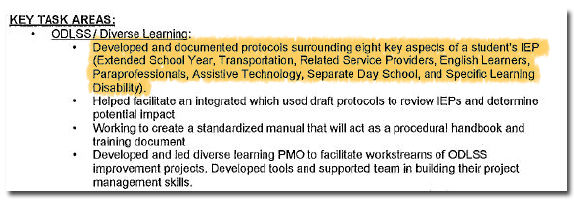
In one document, for example, it cited this central task: “Developed and documented protocols around eight key aspects in a student’s IEP (individualized education plan).” These consultants billed CPS as much as $350 an hour.

A CPS invoice from Crowe Horwath consultants lists their tasks related to CPS 'diverse learners' or special education students, including 'working to create a standardized manual that will act as a procedural handbook.'
These big professional service contracts began under Claypool, who took over CPS in the summer of 2015, and have grown exponentially under his administration. Many of these contractors have long-standing professional ties to Claypool and his team. Altogether, these three firms have been paid more than $14 million under these deals since October of 2015.

Denise Little, a senior advisor to Claypool, downplayed the role of the consultants. Little said she and other CPS officials wrote the protocols and that the consultants essentially edited them.

Claypool defended the use of the auditors. He said special education was suffering because no one was carefully tracking services and checking whether “best practices” were followed.

“(The auditors) are experts in data and they are experts in IT systems and they are experts in process improvement,” he told WBEZ. “That is their expertise. They have decades of success at top levels of management consulting firms, and that is what was required.”

Keenan, CPS’ current head of special education, noted that other school districts have similar manuals.

Changes to special education funding and services
After the new guidelines were created with help from outside auditors, CPS officials turned their attention to the pot of money used to fund special education.

At the start of last school year, CPS budgeted about $29 million less than the year before at its more than 500 district-run schools, a WBEZ analysis of CPS data found. CPS officials said they ultimately spent at least $15 million more than budgeted, but they could not provide a full explanation of where that money went. CPS’ special education enrollment dropped by about 1 percent, but not nearly enough to explain the major dip in funding.

At CPS’ charter schools, which are publicly funded but privately run, the district spent about $5 million more last year for special needs students. Those schools saw a slight uptick in special education enrollment. Cutting special education in charter schools is more difficult than in district-run schools because charter contracts spell out how they are reimbursed for expenses.

The cutbacks at CPS’ district-run schools meant there were 350 fewer special education teachers and 76 fewer aides in the spring of 2017 compared to the year before, according to WBEZ’s analysis of CPS data.

As CPS began cutting its special education budget, children got less time with specialists, such as occupational therapists and psychologists. The time with these clinicians decreased by about 12 percent on average over the course of last year.

Special education students received fewer services last year

Compared with the previous year, time with specialists dropped in the 2016-2017 school year even though the number of students with special needs stayed about the same.

PHYSICAL THERAPY

-12%

NURSING

-12%

OCCUPATIONAL THERAPY

-13%

PSYCHOLOGICAL SUPPORT

-29%

SOCIAL WORK

-13%

SPEECH LANGUAGE THERAPY

-10%

Notes

This data does not include charter schools or alternative schools.
Time with psychologists dropped the most by nearly 30 percent, while time with social workers and physical therapists dropped by about 13 percent.

The number of clinicians also dropped. Though CPS employee records show almost no change in budgeted positions in September, there were 100 clinician vacancies by March.

And the number of special-needs children who got an extended school year — extra class time, usually in the summer — dropped by 56 percent last year, from 7,084 to 3,176.

In an interview with WBEZ, CPS officials involved with the special education overhaul said if students were denied services, it was because they didn’t qualify under the new criteria.

Yolanda Williams’ daughter was one of thousands of students affected. She has Down syndrome and had qualified for occupational therapy for years, Williams said. But last year the staff at Penn Elementary in North Lawndale suddenly stopped providing it to her, she said.

Williams’ daughter sees an occupational therapist outside of school at the University of Illinois-Chicago. That therapist says the girl still needs the extra help at school, Williams said.

“I am trying to understand what happened and why?” she said.

The UIC therapist is teaching her daughter life skills such as brushing her teeth and tying her shoes, Williams said. But she said her daughter’s handwriting is virtually unreadable and she doesn’t know how to read, which are skills an in-school occupational therapist could work on.

Parents begin to notice

Katherine Gladson, a legal aid attorney with expertise in special education, has worked for years helping parents advocate for their children at various Chicago public schools.

She said in previous years, children who needed special education services would go through an evaluation, and then an agreement would be made between the teacher, school clinicians, and a parent.

But under the rules in the new special education manual, that agreement is now only the first step. Next comes reams of documentation and outside approvals.

“It was the most frustrating thing,” Gladson said of her experiences last year. She said in this new process, parents and staff who know the child best don’t have as much power as they once had.

Not only is the process frustrating, it’s also potentially a violation of federal laws designed to ensure special education students get the services they need in a timely fashion, she said.

“That is where we fall into the cycle of delays and potential inappropriate denial of services,” she said.

When Rodriguez enrolled her son at Peck Elementary last fall, she had no idea new special education guidelines existed.

But Rodriguez and her son dealt with its effects. WBEZ is not using her son’s name to protect his privacy.

Before coming to CPS last fall, she took her son out of school for a week for an in-depth evaluation at Ann and Robert H. Lurie Children’s Hospital of Chicago. Lurie psychiatrists said Rodriguez’s son needed a highly specialized school. Absent that, he should have an adult by his side, helping him calm down and focus, Rodriguez said they recommended.

Rodriguez said the special education teacher at Peck agreed that her son’s behavior was “at another level.”

But to get him an aide, the teacher had to spend weeks last fall documenting his every move in 15 minute increments and explaining why that behavior required the attention of an aide.

During that time, Rodriguez said her son mostly sat idle. Fourth grade essentially started without him.

Eventually, CPS approved a shared aide that would also help other students. But in practice, the school allowed the aide to stay by his side nearly all the time. She was thrilled but also worried about the school’s unwillingness to put the full-time aide in her son’s legally binding education plan. She said the experience has made her suspicious of CPS.

“They want a way of just pulling it from him,” Rodriguez said. “Just having control over if he is going to have it one day and not the other day.”

Just as Rodriguez was trying to get her son an aide, lawyers and advocates in Chicago got wind that the secret new rules existed. Amy Zimmerman, director of the Chicago Medical-Legal Partnership for Children, said her phone was ringing off the hook all summer and fall from parents panicked that their disabled children would no longer get bus rides to school.

Many parents had young children who were placed in special preschools far from their homes, and they had no way to get their children there, she said.

Zimmerman said she felt blindsided by the whirlwind of complaints.

“We didn’t know where it was coming from,” she said

Zimmerman said she eventually learned that CPS had overhauled its guidelines and created the secret manual. She said creating a manual for special education is not necessarily a bad idea. Written with the help of special education lawyers and parents, it could help standardize practices and create more parity in services across the city. Getting the right help for a student often can depend on the insistence and persistence of the parent and the school staff, she said.

District officials defended the manual’s development, saying CPS central office staff drafted it. But Zimmerman said CPS did not work with parents, school staff, and the city’s special education lawyers who she says best know the realities of working on special education inside the city’s schools. The changes they instituted meant some kids lost services they had relied on in the past and, in some cases, were legally entitled to, she said.

The manual, for example, prohibited disabled preschoolers from getting bus service, Zimmerman explained.

“The policy was inappropriate and frankly illegal,” she said.

She and some parents went public with their complaints. At a Chicago Board of Education meeting in September 2016, Claypool said he had listened to advocates and would allow preschoolers to take the bus.

But Zimmerman said she fears many parents who had been told there was no busing to special education preschools had already decided by then not to enroll their children.

Summer school was also severely restricted.

Teachers were required to document how much students would regress over the summer without summer school. Then, they could only request summer school during particular months. And special meetings with parents often were required to apply for summer school.

As a result, summer school enrollment for special education dropped by more than half.

“Basically a lot of special education teachers went into revolt over the paperwork,” Estvan said. “They just said, ‘Well this is too much.’”

Rodriguez’s son was only given four weeks of summer school — 16 days for three hours a day. She wanted eight weeks, but the teacher checked a box on a form indicating he would only regress three weeks during the summer without more schooling. Rodriguez said the teacher told her she wasn’t aware that checking that box would result in less summer school.

Also, because his individualized education plan said he only needed a shared aide, he didn’t get one during summer, she said. He also didn’t get speech therapy, even though he stutters badly and has a fluency problems, Rodriguez said.

Chicago’s most vulnerable students
Students with disabilities are among the least likely to graduate from CPS, and those with emotional disabilities, like Rodriguez’s son, are among the least likely to ever get a diploma, according to a 2009 study by the University of Chicago’s Consortium on School Research.

Advocates and parents said they cannot understand why CPS targeted special education services as a place to save money. CPS officials stressed they are not trying to take away services from children, but rather make sure they get the right services.

Estvan said he’s especially disturbed by the secretive nature of this overhaul. CPS’ decision to shift so many items around in the budget last year means there is virtually no trail of what is spent on these students, he said.

He accused CPS of doing this intentionally “to mask this whole thing, to make it less transparent.”

At the very least, this feeds skepticism from families of students with disabilities about the level of services actually delivered to their children, he said.

Claypool, however, insisted that the budgeting change was an attempt to make principals prioritize the needs of special education students.

For this school year, Claypool said overall spending for special education is expected to stay the same as last year, with a slight increase for the most severely disabled students.

Meanwhile, CPS quietly posted an updated manual online this summer. Lawyers said it incorporates some changes they demanded but problems remain. Zimmerman said it is still cumbersome; written at a college level and only provided in English.

“This is a dense document with tons of burdens put on parents,” she said.

In practice, this means the most onerous — and potentially illegal — parts of the original manual are gone, but students likely can expect fewer services this year, she said.

Rodriguez said she is praying for a better year. But so far, she has been disappointed.

Her concerns are heightened this year as her son transitions to a middle school. She has heard the school has problems with drugs, gangs, and bullying.

“I am just worried he is just going to fall into the bad influences because he wants to have friends,” she said. “He tries to warm up to other students. I am just worried some kids are going to take advantage of him.”

And her son lost his full-time aide, just as she feared because it wasn’t spelled out in his education plan last year. At his new school, he is sharing his aide with another student. In addition, Rodriguez said she has witnessed the aide working with all the students in her son’s special education class.

And she said her son has started to act out.

Her next special education meeting at his school is scheduled for the end of October. She has hired Matt Cohen, the attorney with years of experience, to help her.

Rodriguez said the services her son was denied last year — summer school, speech therapy, and weeks without an aide — compound over time, making it that much harder to get him on track.

But she focuses on what he does have — her support. She is a single mother and is often tired when she gets home from work, but she tries to spend a few hours every evening teaching him.

Rodriguez said she will keep fighting for her son. All she wants, she said, is to give him the best chance possible to live up to his potential.

Sarah Karp covers education for WBEZ. Follow her @WBEZeducation and @sskedreporter.
Editor's note:
CPS disputes racial and ethnic demographic data on special education students presented in this story, which come from a Better Government Association report that ran in January.

In an interview with WBEZ, the Better Government Association said it stands by its reporting and that CPS has never asked for a correction.

In a letter to WBEZ, CPS CEO Forrest Claypool said CPS data shows a “dramatic over-representation” of African American and Latino males in special education who are placed in “more restrictive educational environments … This means that African American and Latino boys are pulled out of the general education classroom more often,” which CPS says can have “detrimental effects.”

CPS officials also said white boys are not overrepresented in special education, as the BGA reported. They say just 5.5 percent of all white males are identified for special education, not 15 percent as the BGA reported.

https://www.wbez.org/shows/wbez-news/wbez-investigation-cps-secretly-overhauled-special-education-at-students-expense/2f6907ea-6ad2-4557-9a03-7da60710f8f9