Disability News Service, Resources, Diversity, Americans with Disabilities Act; Local and National.

Friday, February 6, 2015

Dear Fox News; Bipolar Disorder Isn't a Fad

Thanks to all that shared this wonderful article, from many news sources 

HuffPost | by Marisa Lancione | Feb 3, 2015

report by the Social Security Administration (SSA) found that "one in three, or 35.2 percent of people getting federal disability insurance benefits have been diagnosed with a mental disorder." The SSA reported that "disabled beneficiaries have increased 49.7 percent over the past decade" and the "largest 'diagnostic group' for disabled beneficiaries was a mental disorder.' Moreover, not only are the majority of people who are receiving disability benefits suffering from some form of mental illness they are largely diagnosed with a mood disorder.
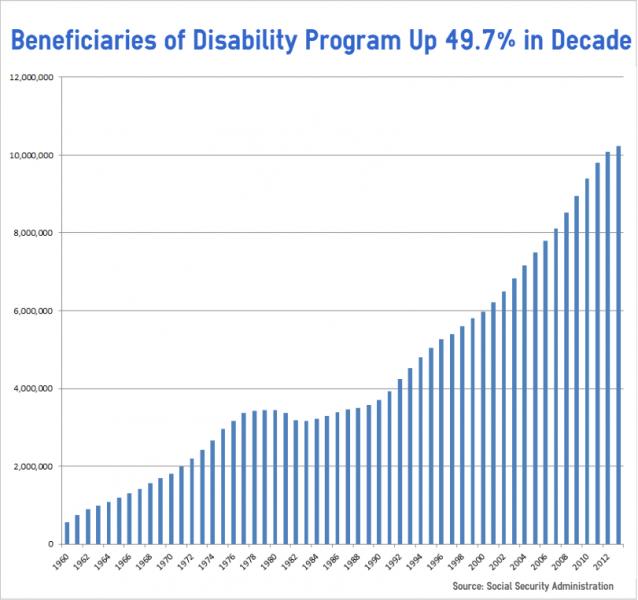
2015-02-01-SSAChartonDisabilities.jpg
As the pillar of journalistic integrity and high quality news reporting, Fox News Radio host, Tom Sullivan, took to the air to talk about all of these lazy bastards receiving disability benefits:
On Wednesday's show, Tom said there are too many Americans with 'mood disorders' who are gaming the system by collecting disability! He argued that many of these people can still work and support themselves.
You know, all of these people with their imaginary illnesses, like bipolar disorder, need to pull up their bootstraps and stop their parasitic sucking on the American people's resources. You know, so we can better fund, like, the military or something.
In an attempt to educate Sullivan, Aunglee from Saramento, called in to talk about her bipolar disorder and how the benefits she receives are integral to living a healthy and happy life. I have to give Aunglee credit because she was so calm and level headed it was incredible because frankly, I lost my shit just listening to their conversation.
Media Matters for America (MMfA) transcribed the interview in full and you can listen to it there, but here's my favorite part. Sullivan actually had the balls to tell this woman that her bipolar disorder is "made up" and is a "fad" perpetuated by the pharmaceutical industry:
I'm very skeptical. And I've got to tell you, if you haven't been told, I will tell you. I think bipolar is like the latest fad. Everybody and their brother is getting diagnosed with bipolar. And last time I checked, we all have good days and we all have bad. And I don't consider that an illness. And I don't consider it a disability.
Bipolar disorder isn't some Hollywood trend like juicing or detoxing. It's a disease that psychiatrists can diagnose and treat with medication, or some people are really lucky and can manage their moods just with therapy. Bipolar disorder is a disease that wreaks havoc on families and ends lives. Bipolar disorder isn't just the ups and downs of regular life. It's not just being sad because your hamster Fluffy died. It's wanting to drive your car off of a bridge because you're experiencing suicidal depression. It's not just about being happy, it's about being so manic that you start to believe you are the second coming of Jesus Christ -- but someone could totally go to work then, right?
I have bipolar disorder and have been on sick leave for almost five months. My hypomania caused rage that made me afraid of myself and what I might do. My depression was so crippling that all I could do was cry for hours on end. If dealing with the mood fluctuations wasn't enough, I was a guinea pig for medication adjustments that cause further intense mood swings and side effects. These medications made me dizzy, made me forgetful, made me nauseous, and gave me crippling headaches. At multiple points in my recovery I couldn't string a sentence together, and as a writer that is something that is extremely important to me. And let's not forget, the drowsiness. I spent almost a week sleeping because I literally couldn't open my eyes. But it's not a disability, right?
But bipolar disorder "didn't exist 25 years ago" until Big Pharma got involved. You know, because according to Sullivan, bipolar disorder is "made up by the mental health business just to be able to give people prescriptions."
Actually, 25 years ago, people with bipolar disorder were called manic depressives. The term manic depression was coined in 1899 by German psychiatrist Emil Kraeplin who developed the classification system for mental illness. The term bipolar disorder wasn't used until the 1980s when the DSM-III was released, which was seen as a revolutionary text in psychiatry (DSM-III and the transformation of American psychiatry: a history). So the disease has existed for over a hundred years, but bipolar disorder is just a fad, right?
So why change the name of an illness that had existed for over 80 years? Stigma (surprise, surprise!) In the introduction to her book, Bipolar Expeditions: Mania and Depression in American Culture, Emily Martin cites a 2002 press release by the Depression and Bipolar Support Alliance who were changing their name from the National Depression and Manic Depression Association because, "many people are frightened by the term "manic depression" and this keeps them from contacting us for help."
I often get asked why I speak so openly about my experiences with mental health and it's because of people like Tom Sullivan. Every day of my life, I battle against my disease. Every day I take pills that are somewhat poisonous to my body, not because "somebody's talked me into feeling and thinking this way" but because they are my lifeline. They are literally the only way I can function like an average person and even then I have mood blips that aren't "normal" (whatever that means).
So before you start to discredit someone's lived experience with mental illness, maybe you should shut up and listen. Or, at least read a book.

This post was previously published on Mad Girl's Lament.
Have a story about depression that you'd like to share? Email strongertogether@huffingtonpost.com, or give us a call at (860) 348-3376, and you can record your story in your own words. Please be sure to include your name and phone number.
Need help? In the U.S., call 1-800-273-8255 for the National Suicide Prevention Lifeline.
http://www.huffingtonpost.com/marisa-lancione/bipolar-disorder-isnt-a-f_b_6591058.html

Newborn With Down Syndrome, a Fathers Love to Refuse to Give Up Son

just needed to share...
Dad Refuses to Give Up Newborn Son With Down Syndrome (ABC News)

Good Morning America | By NICOLE PELLETIERE | Jan 5, 2015

When Samuel Forrest of Armenia heard a baby crying from outside his wife's hospital room, he knew his life would change forever.
Not only had he become a father, but he would soon receive some unexpected news about his newborn son.
"This pediatrician walks out of the room with a little bundle -- that was Leo," Forrest said. "She had his face covered up and hospital authorities wouldn't let me see him or my wife. When the doctor came out, he said 'there’s a real problem with your son.'
Forrest followed doctors and nurses into a room where he'd finally get to meet his baby.
"When I walked into the room they all turned to me and said 'Leo has Down syndrome," he told ABC News. "I had a few moments of shock."
After the news had sunk in, Forrest held Leo for the very first time.
"They took me in see him and I looked at this guy and I said, he's beautiful -- he's perfect and I'm absolutely keeping him."
Soon Forrest walked into his wife's hospital room with Leo in his arms.
Her reaction was unlike one he ever expected.
"I got the ultimatum right then," he said. "She told me if I kept him then we would get a divorce."
Attempts to reach the hospital for comment weren't immediately successful. The baby's mother, Ruzan Badalyan, told ABC News that she did have a child with Down syndrome and she has left her husband, who has the child, but she declined to elaborate.
Forrest, who's from Auckland, New Zealand, said he was completely unaware of the hospital practices in Armenia when it came to children.
"What happens when a baby like this is born here, they will tell you that you don’t have to keep them," he said. "My wife had already decided, so all of this was done behind my back."
Despite his wife's warnings, Forrest said he never had a doubt in his mind that he would hold onto his son.
One week after his birth, Leo's mom filed for divorce.
"It's not what I want," Forrest said. "I didn’t even have a chance to speak with her in privately about it."
Forrest, who works as a freelance business contractor, has plans for he and Leo to move to his native country of New Zealand where he said they'll receive support from loved ones.
In the meantime, he's enlisted for some help on his GoFundMe page titled "Bring Leo Home."
"This really came out of the blue for me," he said. "I don’t have a lot, I have very little in fact. The goal is to raise enough for a year so I can get a part-time job so Leo doesn't have to be in daycare and I can help care for him. He's lost a lot in two weeks. It'd be different if he had his mommy."
Forrest has recently been working with disability awareness groups to share his story in the hopes that parents will become better educated on children with special needs.
"After what I've been through with Leo, I'm not going to sit back and watch babies be sent to orphanages," he said. "As a child with Down syndrome, that becomes somewhat of a label. If we can get around this label, we’ll see that they’re normal. They’re a little different from us, but they’re still normal.
"They all have niches and I want to work hard to find out where Leo's special. This little guy is great."
https://gma.yahoo.com/dad-refuses-newborn-son-down-syndrome-221817795--abc-news-parenting.html

Please help save Illinois Home Services Programs! 2015 State Budget - Call Gov. Rauner!

as shared from Chicago ADAPT, please take time to call Gov. Rauner's office by Feb 12th - Please share this information!

Illinois -- Gov. Rauner releases his first budget Feb. 18 and there is talk of him cutting Human Services programs by 20 percent! This includes the Home Services program, which pays the wages of the assistants more than 30,000 disabled people rely on to help us through each day.

This is intolerable! ADAPT is in action mode pressuring the governor and you can help by being one of hundreds to call the governor's office Monday Feb 12. Just say: "I have a message for the governor. I want him to meet with ADAPT!"

That small act is very helpful. Thank you!


Please call at least one of the numbers below and recruit others to do the same. 

Springfield

Office of the Governor     
207 State House
Springfield, IL 62706
Phone: 217-782-0244
TTY: 888-261-3336

Chicago

Office of the Governor
James R. Thompson Center
100 W. Randolph, 16-100
Chicago, IL 60601
Phone: 312-814-2121

Thursday, February 5, 2015

Pres. Obama Announces New and Enhanced Initiatives to Support Older Americans

PRESS RELEASE | Feb 5, 2015
U.S. Department of Health & Human Services

The President’s 2016 Budget will help ensure that older Americans enjoy not only longer but healthier lives. The Budget makes a number of commitments to enhance, advance, and create opportunity for older Americans, especially in the four focus areas of the 2015 White House Conference on Aging: retirement security, healthy aging, long-term care services and supports, and elder justice.
Let me say a little about a few of the Budget items in each area of focus:
To enhance retirement security, the President is committed to ensuring that Social Security is solvent and viable for the American people, now and in the future.  The Administration will oppose any measures that privatize or weaken the Social Security system and will not accept an approach that slashes benefits for future generations or reduces basic benefits for current beneficiaries. 
Additionally, as many as 78 million working Americans - about half the workforce - don't have a retirement savings plan at work. Fewer than 10 percent of those without plans at work contribute to a plan of their own. The President’s Budget expands retirement opportunities for all Americans to help families save and give them better choices to reach a secure retirement. 
To support healthy aging, the Budget proposes a set of initiatives to strengthen Medicare by more closely aligning payments with the costs of providing care, encouraging health care providers to deliver better care and better outcomes for their patients, and improving access to care for beneficiaries. In addition, the Budget includes proposals that would build a stronger foundation for Medicare's future. 
To provide relief from increased prescription drug costs, the Budget proposes to close the Medicare Part D donut hole for brand drugs by 2017, rather than 2020, by increasing discounts from the pharmaceutical industry. The Budget also proposes to provide the Secretary of Health and Human Services with new authority to negotiate with manufacturers on prices for high cost drugs and biologics covered under the Part D program. These proposals represent a few amongst a range of potential options, and the Administration looks forward to working with Congress to address growing drug costs.  
Recognizing the importance of nutrition to healthy aging, the Budget provides over $874 million for Nutrition Services programs, a $60 million increase over the 2015 enacted level, allowing States to provide 208 million meals to over 2 million older Americans nation-wide, helping to halt the decline in service levels for the first time since 2010.  In addition, the Budget helps provide supportive housing for very low-income elderly households, including frail elderly, to allow seniors to age in a stable environment and help them access human services. 
To ensure older individuals and people with disabilities receive services in the most appropriate setting, the Budget proposes expanded access to Medicaid home and community-based long-term care services and supports. First, the Budget expands and simplifies eligibility to encourage more States to provide home and community-based care in their Medicaid programs. The Budget proposes expanding and improving the “Money Follows the Person” Rebalancing demonstration, which helps States provide opportunities for older Americans and people with disabilities to transition back to the community from institutions. The Budget also includes a comprehensive long-term care pilot for up to five States to test, at an enhanced Federal match rate, a more streamlined approach to delivering long-term care services and supports to support greater access and improve quality of care.
The Budget also includes increased discretionary resources for the Aging and Disability Resource Centers (ADRCs) program, which make it easier for Americans nation-wide to learn about and access their health and long-term care services and support options. ADRCs support State efforts to create consumer-friendly entry points into long-term care services at the community level.
The Family Support Initiative will assist family members supporting older adults or people with disabilities across the lifespan. It will complement nearly $50 million in new resources for existing aging programs that are already providing critical help and supports to seniors and their caregivers, such as respite and transportation assistance.
To support evidence-based interventions to reduce elder abuse, neglect and financial exploitation, the Budget includes $25 million in discretionary resources for Elder Justice Act programs authorized under the Affordable Care Act. These resources will support standards and infrastructure to improve detection and reporting of elder abuse; grants to States to pilot a new reporting system; and funding to support a coordinated Federal research portfolio to better understand and prevent the abuse and exploitation of vulnerable adults. 
Taken together, these and other initiatives in the Budget will help to change the aging landscape in America to reflect new realities and new opportunities for older Americans, and they will support the dignity, independence, and quality of life of older Americans at a time when we’re seeing a huge surge in the number of older adults. 
As many of you are aware, 2015 marks the 50th Anniversary of Medicare, Medicaid, and the Older Americans Act, as well as the 80th Anniversary of Social Security. The commitments made to support older adults in the President’s Budget are a fitting way to mark these anniversaries, and to help fulfill the promise of a better future for older Americans—and for all of us—that is inherent in these landmark pieces of legislation.

http://www.hhs.gov/blog/2015/02/05/new-and-enhanced-initiatives-support-older-americans.html?utm_campaign=020515_hhs_blog_whcoa&utm_medium=email&utm_source=hhs_blog_updates&utm_content=020515_hhs_blog_whcoa_titlelink

disAbility Experiences: Losing Mobility and Gaining a Work Life by Jerry McGill

what a wonderful article on lifes experiences... 

New York Times | article by JERRY McGILL | Jan. 31, 2015

Jerry McGill
I always cringe a little when I hear people say that affirmative action doesn’t work or isn’t fair. That’s because I know I wouldn’t be where I am today without it. I also know that very few people see the issue from the same perspective that I do.

As a young black male from Brownsville in Brooklyn, I was extremely athletic. I played baseball, touch football and basketball. I even took ballet classes with the Eliot Feld ballet school in a special program for disadvantaged city youth. I dreamed of being Gregory Hines.

Growing up in the 1970s, I also had an addiction — video games and pinball — and I desperately craved quarters. I never knew my father, and my mother was often on welfare or working an exhausting temporary job. Feeding my addiction was on me.

I got my first paying gig at the age of 10, bagging groceries at a Key Food on Avenue B and Sixth Street in Manhattan through the father of a schoolmate who managed the store. (We had moved to the Lower East Side after a fire forced us out of our apartment in Brooklyn.) That summer I worked daily shifts, roughly four hours each, for tips. On a good day I brought home $3. On a great day, $5. I was supposed to share a percentage with my mother, but I often shortchanged her.

It became a major source of pride for me, this “pay for labor” thing, and it instilled a work ethic I would never lose. Not even after I was shot in the back while walking home one night. The police never did find my shooter, and the bullet, still lodged near my spine today, paralyzed me for life from the waist down at the age of 13. I spent six months in the hospital trying to recover. My arms were so weak I could barely lift them over my head. I had to learn to do everything all over again.

In high school, I watched as many of my able-bodied friends juggled school and part-time jobs. By this time I had gained considerable upper-body strength. However, as someone who was paralyzed, I never imagined that any employers in their right minds would hire me.

I was fiercely independent and darted around the city in my wheelchair with no assistance, but who would hire a cripple when you could have a “regular” kid? I wasn’t going to deliver pizzas or wash cars or stand behind a counter and ring people up on a cash register. I assumed I would just collect a disability check well into my adulthood. Maybe if I got lucky I would score a computer job down the line.

In the spring of my junior year in high school, a guidance counselor told me about a government-sponsored program that placed high school students with disabilities in work positions for the summer. She encouraged me to apply. I would make minimum wage, of course, but it promised to be more worthwhile than hanging out watching TV, so I signed up.

That June I nervously started my first placement, at a dermatology office at Bellevue Hospital, a bus ride from where my family now lived in Chelsea. Monday through Friday, 9 to 5, I sorted dermatology slides, answered phones and ran materials to and from Bellevue and the neighboring N.Y.U. medical center. I loved it. Someone depended on me to show up. I never took a sick day that summer.

That job gave me a powerful sense of purpose and belonging. I became friendly with many of the staff members there, like nurses, doctors and lab technicians.

Another high school student, a Puerto Rican girl from Harlem who worked in outpatient check-in, became a dear friend. On breaks we would visit one another’s departments and flirt. Every payday Friday, she and I would go out to lunch at our favorite pizza place on Second Avenue.

I fell in love with her. But that’s a whole other story. The point is that Working — with a capital W — filled me with such confidence and increased my self-esteem in such immeasurable ways that I could feel comfortable falling for a beautiful able-bodied girl.

My boss at Bellevue was Rachel, a middle-aged doctor, who talked to me as if I were an adult. She set the bar impossibly high for all of my future bosses. She was humorous and laid-back, but was also conscientious and well respected by her peers. I remember thinking that if I ever got to be someone’s boss, I’d strive to be like her.

On my last day there before having to return to school for my senior year, Rachel took me out to lunch at a popular Indian restaurant. She told me she often took new interns there. I felt special, important, appreciated. She said she would miss me and that if I wanted to return, there would be a job there for me next summer. I nodded, thinking that was exactly what I wanted. But that next summer the program gave me a different placement at the Bobst Library at N.Y.U. in the heart of Greenwich Village, placing bar codes in books.

Though the mood and responsibilities were different, the pride and sense of self-worth were the same. It gave me great satisfaction to get out of the house by 8 every morning knowing I wouldn’t be back until nightfall because I had a job. I had to be someplace where my knowledge and expertise were needed.

Even the drug dealers in my neighborhood respected me. I knew this because my building had three steps to the entrance, and every morning and night one of those dealers helped me up or down the steps. The one I was closest to would see me in the morning and say: “Gotta get Jerry to the office.”

It has been nearly 30 years since I rolled into that Bellevue lobby, a skinny kid with a Richard Pryor Afro in a clunky wheelchair. With the exception of a few tiny breaks, I haven’t stopped working since. I’ve been a customer service representative, a case manager for homeless youth, an actor in commercials and films and a production manager and writer for a theater company, among other things. Once I even dressed up as a cow and passed out fliers in Times Square to promote a new Ben & Jerry’s. And I always have that pride — that feeling that I’m a contributing member of society. I matter.

My belief is that the people who are against affirmative action must lack an empathy gene. Oh, if they could only roll a mile in my wheelchair. The unemployment rates for people with disabilities worldwide are mind-numbingly high. I know because I’ve traveled to over two dozen countries and met these people, as a tour guide leader for those with disabilities. The main reason the jobless rate is so high for people with disabilities is that they are not given an equal chance in the mainstream work world.

Employers bring their own baggage and ill-conceived preconceptions about my tribe. The Americans With Disabilities Act and similar laws notwithstanding, some employers are unwilling to make certain changes to an office space that would make a worker’s life more comfortable and productive. I had several jobs where the floor on the building I worked in didn’t have a wheelchair-accessible bathroom; at one job I even had to go across the street to a different office building to use a bathroom that didn’t belong to my company. This little trip was a bonus in the summer, but was dreadful in the winter.

The sad truth is that sometimes employers need a forceful nudge to make them do the right thing. That’s just the harsh reality. I got really lucky. But luck should not have to be a part of the equation.


* JERRY McGILL is the author of “Dear Marcus: A Letter To The Man Who Shot Me” (Spiegel & Grau) and the recently self-published thriller “Othello’s Brother.” He lives in Portland, Ore.

A version of this article appears in print on February 1, 2015, on page BU8 of the New York edition with the headline: Losing Mobility and Gaining a Work Life.
http://www.nytimes.com/2015/02/01/business/losing-mobility-and-gaining-a-work-life.html?ref=topics&_r=0

Wednesday, February 4, 2015

U.S. Justice Dept settles investigation of 4 Cities over online job Applications and Ensure Web Accessibility

PRESS RELEASE | Feb 3, 2014
U.S. Department of Justice

Justice Department Reaches Settlements with Four Cities Across the Country to Remove Disability-Related Questions from Job Applications and Ensure Web Accessibility

The Justice Department announced today that it has reached settlement agreements with the cities of DeKalb, Illinois; Vero Beach, Florida; Fallon, Nevada; and Isle of Palms, South Carolina.  The agreements resolve investigations of each city under Title I of the Americans with Disabilities Act (ADA).  The investigations found that each city’s online employment application asked questions about disabilities in violation of the ADA.  The ADA does not permit employers to inquire as to whether an applicant is an individual with a disability or as to the nature of such disability before making a conditional offer of employment.  Under Section 503 of the Rehabilitation Act of 1973, however, federal contractors subject to affirmative action requirements may invite an applicant voluntarily to self-identify as an individual with a disability, consistent with certain requirements. 
The investigations also found that each city’s online employment opportunities website or job applications were not fully accessible to people with disabilities, such as those who are blind or have low vision, are deaf or hard of hearing, or have physical disabilities affecting manual dexterity (such as limited ability to use a mouse).  In recent months, the department reached similar settlement agreements with the city of Hubbard, Oregon, and Florida State University. 
“Congress intended for people with disabilities to be able to compete for jobs on a level playing field,” said Acting Assistant Attorney General Vanita Gupta of the Civil Rights Division.  “Including disability-based questions on a job application is illegal and creates barriers for people with disabilities.  These agreements ensure that people with disabilities will have an equal chance to compete for public sector jobs.  We commend each city for its cooperation and efforts to ensure accessibility and fairness in the job application process.”   
Under the settlement agreements, each city agrees to ensure that its hiring policies and procedures do not discriminate against any applicant on the basis of disability, including by:
  • not conducting a medical examination or making a disability-related inquiry of a job applicant before a conditional offer of employment is made;
  • not requiring a medical examination or making inquiries of an employee as to whether such employee is an individual with a disability or as to the nature or severity of the disability, unless such examination or inquiry is shown to be job-related and consistent with business necessity;
  • maintaining the medical or disability-related information of applicants and employees in separate, confidential medical files;
  • training employees who make hiring or personnel decisions on the requirements of the ADA, designating an individual to address ADA compliance matters, and reporting on compliance; and
  • ensuring that its online employment opportunities website and job applications conform with the Web Content Accessibility Guidelines 2.0, which are industry guidelines for making web content accessible.
Those interested in finding out more about the ADA may call the Justice Department’s toll-free ADA information line at 800-514-0301 (TDD 800-514-0383) or visit www.ada.gov.
visit www.ada.gov.
http://www.justice.gov/opa/pr/justice-department-reaches-settlements-four-cities-across-country-remove-disability-related
15-129

CELEBRATING ACCESS TODAY: 25TH ANNIVERSARY YEAR OF THE AMERICANS WITH DISABILITIES ACT - U.S. Dept. of Justice

as posted by the U.S. Department of Justice | Jan 30, 2015

Twenty-five years ago, our nation committed itself to the elimination of discrimination against people with disabilities—through the Americans with Disabilities Act (ADA).  The U.S. Department of Justice’s Civil Rights Division is proud to play a critical role in enforcing the ADA, working towards a future in which all the doors are open to equality of opportunity, full participation, independent living, integration and economic self-sufficiency for persons with disabilities.  In honor of the 25th anniversary of the ADA, each month the Department of Justice will spotlight efforts that are opening gateways to full participation and opportunity for people with disabilities.  This month, we spotlight the story of Marshall Burns and website access in Nueces County, Texas.
When Marshall Burns was invited to present at the Coastal Bend Hurricane Conference in Nueces County, Texas, he was excited and honored.  Being asked to share his professional expertise—emergency preparedness in transit services—with peers was a highlight in Mr. Burns’ career.  But when Mr. Burns tried to register online for the conference, he couldn’t do so.  That’s because Mr. Burns is blind.  The forms on Nueces County’s website were incompatible with the software program that reads text out loud to Mr. Burns.  Barriers to accessibility mean that, not only will people like Mr. Burns be discouraged from participating in local programs, but that all individuals, regardless of disability are not able to benefit from the expertise that Mr. Burns and others can share.
Over the next three years, experiences like Mr. Burns’ will become a thing of the past.  Nueces County and the U.S. Department of Justice have reached an agreement under Project Civic Access (PCA), the Department’s wide-ranging initiative to ensure that cities, towns and counties throughout the country comply with the Americans with Disabilities Act (ADA).  One of the hallmarks of the agreement is the requirement that the County will assess all existing web content and online services for conformance with industry guidelines—the Web Content Accessibility Guidelines (WCAG) 2.0—for making web content accessible.
Mr. Burns has told the department that he’s “happy to see that Nueces County will be complying with WCAG 2.0.  WCAG was developed by people with disabilities for people with disabilities and meets standards that will enable us to navigate the county’s websites on our own.” 
Under the agreement, Nueces County, Texas, will also ensure that people with disabilities—especially people who use wheelchairs and other mobility devices—can get inside buildings that offer County services and programs.  That means the county will renovate everything from entrances, service areas and counters, restrooms, and parking so that people with disabilities can get into county buildings and use services and programs the county offers.  Sidewalks and curb cuts all over the county will also be targeted—another change that promises to significantly improve life for people with disabilities in Nueces County. 
Over the past 15 years, nearly 220 communities have signed agreements with the Department of Justice to ensure that their citizens with disabilities enjoy the same services, programs and activities that all others enjoy. For information on how jurisdictions can participate in Project Civic Access visit www.ada.gov
http://www.justice.gov/opa/blog/celebrating-access-today-25th-anniversary-year-americans-disabilities-act


Sen. Rand Paul on Disabilities (he just can't help himself)

Republican Sen. Rand Paul

MSNBC | article by Steve Benen | Jan 31, 2015

A couple of weeks ago, Sen. Rand Paul (R-Ky.) raised a few eyebrows by complaining about Americans receiving disability benefits. “Over half of the people on disability are either anxious or their back hurts. Join the club,” the senator said at a New Hampshire event. “Who doesn’t get up a little anxious for work every day and their back hurts? Everybody over 40 has a little back pain.”
 
Since I took note of Paul’s comments, it’s only fair to also mention that the senator’s office has since elaborated on the same point. Whether or not he’s made things better or worse is a matter of perspective.
Paul spokesman Brian Darling pointed to two data points – 27.7 percent of disabled beneficiaries are diagnosed as having ailments related to “Musculoskeletal system and connective tissue” and that 14 percent have “mood disorders.” That adds up to 42 percent, he noted. (There’s also nearly 4 percent who cite injuries, which presumably could cover back injuries.)
Obviously, quibbling over the difference between “over half” and “42 percent” seems unnecessary. Indeed, if the only problem with Paul’s comment was arithmetic, this would hardly be worth highlighting.
 
But there’s a far more substantive concern here. At his campaign stop, Paul referenced anxiety as effectively meaningless – practically everyone, he said, gets “a little anxious for work every day.” His office, however, pointed to “mood disorders,” which as Glenn Kessler’s report explained, refers to the part of the population that suffers from “conditions like bipolar disorder, major depressive disorder, and dysthymia (persistent depressive disorder).”
 
The senator seemed to think this was some kind of punchline, as if those with bipolar disorder just get “a little anxious” before leaving for work.
 
Or more to the point, Paul seems to believe that those dealing with severe mental health issues are necessarily undeserving of disability benefits – or as he put it at the time, “gaming the system.”
 
What’s more, as Dylan Matthews explained, the senator doesn’t seem to fully understand the system he’s complaining about.
The other problem with Paul’s statement is the idea that somehow qualifying for disability on the basis of anxiety or back pain is illegitimate. This is a sadly typical view. Anxiety is massively misunderstood as just having “nerves” or “jitters,” and chronic debilitating back pain is conflated with the common discomfort that Paul describes. Both are less physically obvious to outsiders than, to use Paul’s example, paralysis. But both are real conditions that can keep one from working, and under current law applicants are required to show that they really do keep them from working.
 
If you need to get disability benefits, it’s not enough to be diagnosed with a condition like anxiety or back pain. Kathy Ruffing of the Center for Budget and Policy Priorities explains that a condition must have lasted at least five months, and be expected to last 12 months or more, or else result in death. Indeed, mortality rates are much higher for disability recipients than the general population:
 
The disability must also render the applicant unable to earn $1,090 or more a month. Not just unable to earn $1,090 in their current line of work, or their current geographic location, but unable to earn it “in the national economy,” given the applicant’s age, education level, and work experience. If you can switch your line of work, you are expected to do so.
It’s no wonder, then, that disability recipients are disproportionately older and less educated, and thus less able to move to jobs where their disability won’t affect them: It’s also no wonder that rejection rates for the program are very high. Only 25 percent of applicants are granted benefits on their first try:
Rand Paul’s broader point seemed to be that there’s waste in government programs, and then in a Paul administration, officials would go after disability insurance claims, confident that most of the applicants don’t deserve benefits.
 
What the senator actually helped prove, however, is that this is another issue he’s eager to talk about without having his facts straight.
http://www.msnbc.com/rachel-maddow-show/rand-paul-disabilities-take-two

Related Posts: 

Sen. Rand Paul (R) "some people game the system" to receive disability payments they don't deserve


Tuesday, February 3, 2015

Access Living of Chicago Results of the Candidates for Mayor in Chicago, Disability Questionnaire

as shared by Access Living, and we encourage all to go to link provided for the detailed results of  the questionnaire about disability issues from the candidates for Mayor the City of Chicago.

Dear Access Living friends and allies,

To those following the Chicago mayoral election, we have exciting news.  Access Living contacted all five of the candidates for mayor here in Chicago with a questionnaire about disability issues affecting everyone living in Chicago.  ALL FIVE of the campaigns responded with very interesting answers.  
Hot off the presses, you can read the questionnaire questions and responses at www.accessliving.org/1410ga87. Be sure to read all the way to the bottom because you will see they all had different ways of answering the open ended questions, in particular.
The results of the questionnaire in no way represent an endorsement by Access Living.  The responses from the candidates are there FOR YOU, the reader, to make your own decision about who has the best interest of people with disabilities at heart.  Please be sure to share the link on Facebook and with all your friends in Chicago to make sure people know what the candidates think about disability issues.
We are grateful to the campaigns for their responsiveness.  We are also grateful to all of our disability advocate friends who have fought hard to shape the issues represented in the questionnaire.  We could not touch on every disability issue, since every issue has a disability angle.  However, we think that the responses help illuminate how each of the candidates thinks about disability.
Remember, if you have questions about voting, go to www.chicagoelections.com.  Early voting is February 9 to 21, and Election Day is February 24. You also have the option of voting by mail on request.
 For Access Living of Chicago website, visit: https://www.accessliving.org/

Special Olympics Illinois Lottery Ticket - first U.S. Lottery game to benefit Special Olympics

as posted by Special Olympics Illinois
The Illinois Lottery and Special Olympics Illinois are proud to announce the first U.S. Lottery game to benefit Special Olympics. Gov. Pat Quinn signed Senate Bill 219 at the 2014 Special Olympics Illinois Summer Games Opening Ceremony on Friday, June 13, 2014, at Illinois State University’s Hancock Stadium in Normal.

“There are few things as inspiring as watching a Special Olympics competition,” said Gov. Quinn. “The athletes’ cheerful determination can brighten anyone’s day. With this Lottery ticket, we are returning the favor by helping more of these competitors realize their Olympic dreams.”

Sponsors of Senate Bill 219 creating include: Sen. Mattie Hunter (D-Chicago), Sen. Bill Cunningham (D-Chicago) and Reps. Fran Hurley (D-Chicago) and Dan Burke (D-Chicago).

The new game will provide funds for training and competition programs that benefit more than 21,000 Special Olympics athletes in Illinois from all 102 Illinois counties. These funds will also allow for the organization to continue transforming lives. The Lottery ticket will help Special Olympics Illinois offer increased participation for eligible athletes in the state as well as pursue additional national and international opportunities for their existing athletes.

New money generated from the Lottery game will not be used for administrative expenses.

“We are incredibly grateful for this new initiative that will allow Special Olympics Illinois to continue transforming the lives of both current and future generations of Special Olympics athletes. Funds raised from this game will lead to further innovation and program growth, and expand opportunities for individuals with intellectual disabilities, their families and volunteers throughout Illinois,” said Dave Breen, Special Olympics Illinois President & CEO.

Specialty games like the Special Olympics Illinois ticket personify the heart and soul of the Lottery. The Special Olympics Illinois ticket will be offered as part of a rotating schedule of special Lottery instant games that benefit unique causes and will be available in February 2015 at Illinois Lottery retailers throughout the state.
http://www.soill.org/go-for-the-gold-special-olympics-illinois-lottery-game/
###
Play the ticket that benefits Special Olympics Illinois and supports our athletes. #ILLotterySpecialOlympics

Pres Obama's "Social Security Disability Insurance" (SSDI) fix makes sense

wanted to share this article on the current funding issue of Social Security Disability Insurance (SSDI), which pays benefits to you and certain members of your family if you are "insured," meaning that you worked long enough and paid Social Security taxes. 
###

The Fiscal Times | article BY MARK MILLER,Reuters | Feb 2, 2014

CHICAGO (REUTERS) - President Barack Obama signaled on Monday that he wants to keep 11 million disabled Americans out of a looming brawl over Social Security reform by shifting revenue between the program’s disability and retirement insurance trust funds.

It's a sensible step to take while Congress works on long-term solutions to Social Security's possible insolvency two decades from now.

At issue is the program's disability insurance trust fund, which is on track to be depleted at the end of 2016. At that point, revenue would be sufficient to pay only 80 percent of benefits to disabled beneficiaries.

The president's 2016 budget, released by the White House on Monday, calls for fixing that problem through a small reallocation of existing payroll tax revenue from the Social Security retirement trust fund while long-term solutions are debated for the program's overall health.

The proposal could be the start of a fight with the Republican-controlled Congress. House Republicans last month adopted a rule that effectively forbids the House from approving any financial fix to the disability trust fund unless it is coupled with broader reforms.

"By including rebalancing in his budget, the president is making clear where he stands, and sending a message that our nation's Social Security system is too important to the American people to hold it hostage to congressional politicking," said Rebecca Vallas, director of policy for the Poverty to Prosperity Program at the left-leaning Center for American Progress, which has been advocating for disability reallocation.

The budget calls for a five-year reallocation of payroll taxes from the Old-Age and Survivors Insurance (OASI) trust fund to the disability fund (DI), starting in January 2016 and ending in December 2020. The plan would increase the payroll tax allocated to DI by 0.9 percentage point, with a corresponding decrease in funds received by OASI. The change would have no overall effect on the longevity of the combined trust funds, which are expected to be exhausted in 2033.

Reallocation has occurred 11 times in the past, with funds flowing in both directions. And, despite a flurry of media coverage that focuses on abuse and fraud, the main sources of pressure on the disability program are straightforward and have been long predicted.

The aging of the baby boom generation means more people are entering the years when the risk of disability rises. Another key factor is the interaction of the disability and retirement programs.

WHO IS ON DISABILITY
Seventy percent of disability insurance beneficiaries are in their 50s and 60s. Let's say you injure your back or suffer a debilitating stroke in your late fifties - still too young to file for retirement benefits. You would file for a disability insurance benefit, and if the application is approved, you would begin receiving a benefit equal to the amount of a full retirement benefit, based on the work credits earned to that point.

Your benefit payment would shift over to the retirement program when you reach full retirement age. But under reforms enacted by Congress in 1983 the full retirement age has risen from 65 to 67 for individuals born in 1960 or later, and to 66 for people born before 1960.

The increase in retirement age keeps beneficiaries on disability rolls for longer periods of time. Some 400,000 people ages 65 and 66 spend an additional year on the disability rolls annually, according to the Center on Budget and Policy Priorities.

The pressure on disability insurance is expected to wane as more boomers shift to retirement in the years ahead. So the need for a fix is temporary, and should be dealt with as part of a more thoughtful Social Security financial reform process that takes into account the retirement program.

The White House reallocation proposal is good news for disability beneficiaries - if lawmakers are willing to go along. But the House seems poised to insist that reallocation won't happen without changes to the retirement program

That would be an appalling development, considering that many disability beneficiaries are economically vulnerable. Older recipients (age 60-64) are 1.6 times more likely to live below the poverty line than people not on disability, according to the Urban Institute; 31 percent of beneficiaries age 31-49 had family income below the federal poverty line. The average benefit, about $1,140 per month, replaces about half or less of a worker's earnings.

Cutting benefits for the disabled would be the latest evidence - should you need any - that lawmakers are completely out of touch with their constituents. Poll data consistently shows strong support across ideological, party and demographic lines for bolstering Social Security benefits - not cutting them.

And it's completely unnecessary. Social Security has $2.8 trillion in reserves, enough to pay full benefits for two decades while we figure out a long-term solution.

Let's do a reallocation - now.

(The opinions expressed here are those of the author, a columnist for Reuters.)

For more from Mark Miller, see http://link.reuters.com/qyk97s
(Follow us @ReutersMoney or at http://www.reuters.com/finance/personal-finance
Editing by Lauren Young and Steve Orlofsky) 
 http://www.thefiscaltimes.com/latestnews/2015/02/02/Why-White-House-disability-insurance-fix-makes-sense#sthash.2l4EuFeb.dpuf

Monday, February 2, 2015

Illinois Cook County Jail inmates denied wheelchair accommodations

Chicago Sun Times | article by  Reema Amin | Jan 29, 2015
Two wheelchair-bound inmates at Cook County Jail filed separate federal lawsuits Thursday, claiming they have been denied a proper cell or medical treatment for their disabilities.
John Givens, 35, and Harold Vaughn, 54, filed their suits against Cook County Sheriff Tom Dart and the county as a whole.
This is the second suit Givens has filed regarding a lack of wheelchair accessibility at the jail.
In Thursday’s suit, Givens claims medical personnel ordered he be provided a wheelchair and a cell accommodating his disability when he was first booked in May 2012 for a first-degree murder charge, according to the suit and the Cook County sheriff’s office website.
But it claims he has not received special housing, making it difficult for him use the bathroom, take a shower, get into his bed or access common areas — claims also alleged in his first lawsuit filed in February 2014.
Jail staff also made Givens roll his wheelchair up “an extremely steep and long ramp” that leads to the Cook County Criminal Court, where he has then held in a detention cell that does not have an accessible toilet for him, the suit alleges.
In August 2014, Givens claims he fell in the shower and broke his wrist because he did not have a functional shower chair. Medical staff said he needed to see an orthopedic surgeon, but he claims he has never received treatment.
Vaughn’s suit alleges he too has not received a wheelchair-accessible cell since he was booked in October 2012 for a predatory criminal sexual assault charge.
That suit also claims Vaughn hurt himself when he fell out of his wheelchair during a transport in summer or fall of 2014.
Vaughn said he is currently in the Residential Treatment Unit, or an area with ten cells that is designed for protective custody of inmates, including those in wheelchairs, the suit said. But Vaughn has allegedly been denied the right to live in the unit’s single cell designed for handicapped inmates.
Cara Smith, the jail’s executive director, said in a statement that inmates are properly cared for.
“While we have not had an opportunity to thoroughly analyze the complaints, we are confident in the care and accommodations we provide to detainees placed in our custody,” Smith said in the statement.
Both lawsuits filed Thursday claim the jail is violating the Americans with Disabilities Act. They are demanding an unspecified amount in damages, plus legal fees.
Givens was first charged after he and two accomplices allegedly tried robbing a Little Village neighborhood business in April 2012, authorities said at the time. The three were eventually shot by Chicago Police officers when trying to escape, and suspect David Raynell Strong died from the gunshot wounds, authorities said.
Givens and accomplice Leland Dudley were both charged with a range of offenses, including burglary and murder ­— because Strong’s death happened during the commission of their alleged crime, police said.
Givens and Dudley had also filed a lawsuit against the city of Chicago on that matter in 2012, claiming they were unarmed when police shot them.
Information on Vaughn’s alleged offenses was not available.
http://chicago.suntimes.com/news/7/71/330825/suit-cook-county-jail-inmates-denied-wheelchair-accommodations