| |||||||
| |||||||
| |||||||
|
Showing posts with label Arts. Show all posts
Showing posts with label Arts. Show all posts
Monday, September 18, 2017
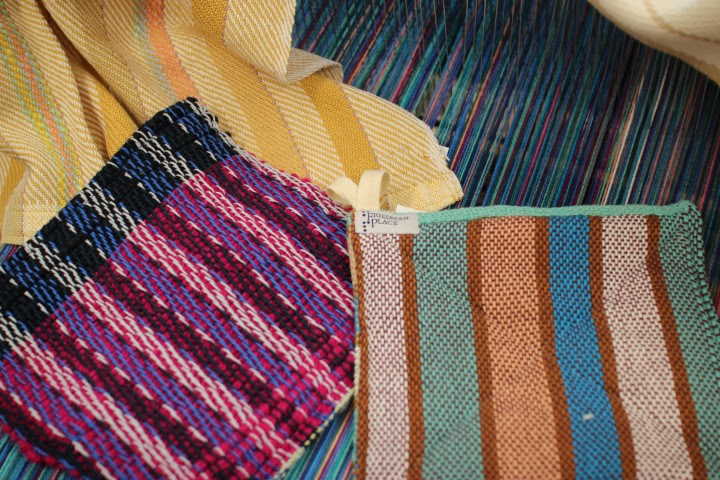
Join Friedman Place at Edgewater Arts Festival in Chicago Sept. 23rd, 2017



Monday, August 21, 2017
2 FREE Museum Day Admission Tickets from Smithsonian Magazine Saturday September 23rd 2017
Free Admission for you and one guest to over 1500 participating museums and cultural venues nationwide! Each ticket is valid for 2 FREE admissions! To receive your free Museum Day Live! ticket for two people only, register for an account. Once registered, you can request a ticket to one participating venue. The ticket will be available to download immediately up to the date of the event. You must print your ticket and present it to receive your free admission or have it accessible on your mobile device (pending museum participation).


Get 2 FREE Museum Day Admission Tickets from Smithsonian Magazine for Saturday September 23. Registration will begin on August 25, 2017.
Please check with the venue for accessible services available.
Wednesday, July 19, 2017
Defiant Lives Documentary Traces The History of Disability Rights Movement in Australia, USA and UK
Australian documentary, Defiant Lives, traces the history of disability rights at home and abroad, with the aim of challenging the movement’s erasure
article by Luke Buckmaster for The Guardian | July 16, 2017
When you talk about disability rights with people, they just look at you like they didn’t think such a thing existed,” says Dr George Taleporos. “People don’t like talking about, hearing or watching disability. It’s not as sexy as gay rights or climate change. It’s just not.”
Taleporos is a disability rights activist, and a wheelchair user. He appeared in the first season of ABC TV’s You Can’t Ask Me That and now in the feature film documentary Defiant Lives. Director Sarah Barton tells a largely untold story, charting the history of the disability rights movement in Australia, the US and the UK. “As someone with a disability, it’s really novel to see a film about your people,” Taleporos says.
“Disability is never represented from a human rights perspective. It’s represented through a lens of pity, or stories about overcoming the odds. The hero who, despite their hideous impairment, was able to get into the Paralympics. It’s all about the hero and pity narrative. Never about the disability rights narrative.”
Facebook: Defiant Lives Documentary
article by Luke Buckmaster for The Guardian | July 16, 2017
When you talk about disability rights with people, they just look at you like they didn’t think such a thing existed,” says Dr George Taleporos. “People don’t like talking about, hearing or watching disability. It’s not as sexy as gay rights or climate change. It’s just not.”
Taleporos is a disability rights activist, and a wheelchair user. He appeared in the first season of ABC TV’s You Can’t Ask Me That and now in the feature film documentary Defiant Lives. Director Sarah Barton tells a largely untold story, charting the history of the disability rights movement in Australia, the US and the UK. “As someone with a disability, it’s really novel to see a film about your people,” Taleporos says.
“Disability is never represented from a human rights perspective. It’s represented through a lens of pity, or stories about overcoming the odds. The hero who, despite their hideous impairment, was able to get into the Paralympics. It’s all about the hero and pity narrative. Never about the disability rights narrative.”
YouTube published by sydfilmfest
Drawing on research from experts such as Taleporos, Barton’s documentary asserts that this hero/pity narrative created a negative stigma that still has powerful implications today. It is associated with the medical model of disability, which is often criticised for treating people with disabilities as lacking or abnormal – or as if they are sick and in need of a cure.
Barton has previously explored disability issues in productions including Australia’s first disability culture program, Channel 31’s No Limits, which was hosted by the late Stella Young.
“When you hear of people having a baby, they say things like, ‘I just want the baby to be healthy, I just want it to be normal’,” Barton says. “It’s kind of like disability is the worst possible thing that can happen. The reality is that it’s not.
“Yes, it does lead to hardship, but often that hardship is due to lack of support and lack of understanding on the part of society. People’s difficulties and hardships could be minimised if people with disabilities were well supported by the community.”
In 2015, according to ABS data, 4.3 million people – or almost one in five Australians – reported living with a disability. In Australia more than 30,000 disabled people under 65 live in institutions or hospitals; in the United States that figure exceeds two million.
The cradle-to-the-grave approach to caring for people with disabilities is expensive. It’s no surprise, then, that fundraising initiatives, such as telethons, have been introduced over the years to boost coffers. You know the kind, with dance numbers, puff pieces and wall-to-wall “inspirational” and/or tear-jerking stories interspersed with calls to action for viewers to cough up some coin.
Defiant Lives shows vision of such a telethon from the 1970s, featuring some the biggest names in local TV at the time including Barry Crocker, John Farnham and Pat McDonald. They hold hands, smile for the cameras and sway along to What the World Needs Now is Love. An image appears on screen with text reading “Happiness is helping spastic children”.
Then, the documentary abruptly changes tone. Barton transitions to intense, pulse-pounding footage showing how members of the disability community responded to such broadcasts. Which is to say: not positively.
Furious anti-telethon campaigners, many in wheelchairs, gatecrash these events. They picket and protest. Some hold placards printed with messages such as “No pity”.
All the telethons did was make them think that their lives were worthless, and having a disability was the worst thing in the worldDr George Taleporos
“There was the assumption that telethons were a good thing for people with disabilities,” Taleporos says. “But the reality was that all they did was make them think that they were going to die tomorrow, that their lives were worthless, and having a disability was the worst thing in the world.
“People would look at them and feel sorry for them, rather than give them jobs or ask them out on a date. The sort of things we want from other people.”
Of course, Barton adds, initiatives like telethons came with good intentions: “I think a lot of people got involved because they wanted to help people,” she says. “But where they failed was when disabled people spoke up and said, ‘No, this is not the way we want to be portrayed. This does not give us dignity and respect.’ Many of the people running those charities did not listen. The charities had also become addicted to the money they were raising.”
Most organisations, such as Yooralla, scrapped their telethons a long time ago in response to this community outcry. One that persisted for many years, in the face of considerable protest, was run by a person reviled within the disability community: the comedian Jerry Lewis.
“I remember watching Jerry Lewis on TV reruns,” says Taleporos. “I never knew he was such a dickhead until I became aware of the disability rights movement.”
The Jerry Lewis MDA (Muscular Dystrophy Association) Labor Day Telethon lasted for almost half a century – from 1966 to 2014, with Lewis dropping out as host in 2011. Some likened the event to a modern-day equivalent of the notorious 1932 film Freaks. It didn’t help when Lewis wrote an astonishingly ill-advised magazine article entitled If I had muscular dystrophy in which he described people with MD as “half a person”.
Says Barton: “Jerry Lewis was the worst offender, because he just said, ‘No, I know better than you do’, and kept going for decades in the face of protests. But there were others as well in Australia – the Miss Australia quest [which doubled as a fundraising initiative], that sort of thing – where really, they knew for a very long time that this pageant and quest and everything was on the nose, and they didn’t do anything about it.”
The director spent eight years constructing Defiant Lives. The documentary addresses various historical frameworks that have provided a lens through which sections of society have viewed disability rights – including social, medical and charity models.
It is also a film intended for mainstream consumption, with the aim to fill a gap in the market. As Taleporos observes: “When you go on Netflix, there’s a documentary about every single stupid topic you could ever think of.” But never any about disability rights.
American blogger and human rights activist Dominick Evans has described Defiant Lives as “essential viewing”, but says there are gaps in its focus, including a lack of people of colour and of insight into work achieved by the deaf community. Barton says she captured examples of both in the shoot, but struggled to fit them into the narrative in the editing room.
“In a way it kind of goes against the premise of the film, which is that regardless of what your disability is, these issues apply,” she says, addressing the criticism around lack of hearing-impaired people. “These issues of social barriers really do apply across the board. I never once went, ‘Oh, I haven’t got enough people with cerebral palsy’ or ‘I haven’t got enough blind people or deaf people.’ I was not concerned with what people’s impairments were. I was concerned with their role in the bigger picture of the disability rights movement.”
Making Defiant Lives palatable for general audiences involved homing in on areas of conversation far removed from things you find in textbooks or at conferences. Thus the riveting, at times hair-raising footage – including protests with disabled people literally putting their bodies on the line by chaining themselves to buses and throwing themselves off wheelchairs.
“That’s when I knew I had a good film on my hand, when I found that,” says Barton. “I wanted an audience not necessary connected [to the disability community] to see it. I want the film to open their minds to something they haven’t necessarily thought about.”
• Defiant Lives is screening through July and August in New South Wales, Queensland, Victoria and Western Australia. Visit the website for an up-to-date list of screenings
https://www.theguardian.com/society/2017/jul/17/the-protest-and-power-of-disability-activism-its-not-as-sexy-as-gay-rights-or-climate-change
Drawing on research from experts such as Taleporos, Barton’s documentary asserts that this hero/pity narrative created a negative stigma that still has powerful implications today. It is associated with the medical model of disability, which is often criticised for treating people with disabilities as lacking or abnormal – or as if they are sick and in need of a cure.
Barton has previously explored disability issues in productions including Australia’s first disability culture program, Channel 31’s No Limits, which was hosted by the late Stella Young.
“When you hear of people having a baby, they say things like, ‘I just want the baby to be healthy, I just want it to be normal’,” Barton says. “It’s kind of like disability is the worst possible thing that can happen. The reality is that it’s not.
“Yes, it does lead to hardship, but often that hardship is due to lack of support and lack of understanding on the part of society. People’s difficulties and hardships could be minimised if people with disabilities were well supported by the community.”
The protest and power of disability activism: 'It's not as sexy as gay rights or climate change'
In 2015, according to ABS data, 4.3 million people – or almost one in five Australians – reported living with a disability. In Australia more than 30,000 disabled people under 65 live in institutions or hospitals; in the United States that figure exceeds two million.
The cradle-to-the-grave approach to caring for people with disabilities is expensive. It’s no surprise, then, that fundraising initiatives, such as telethons, have been introduced over the years to boost coffers. You know the kind, with dance numbers, puff pieces and wall-to-wall “inspirational” and/or tear-jerking stories interspersed with calls to action for viewers to cough up some coin.
Defiant Lives shows vision of such a telethon from the 1970s, featuring some the biggest names in local TV at the time including Barry Crocker, John Farnham and Pat McDonald. They hold hands, smile for the cameras and sway along to What the World Needs Now is Love. An image appears on screen with text reading “Happiness is helping spastic children”.
Then, the documentary abruptly changes tone. Barton transitions to intense, pulse-pounding footage showing how members of the disability community responded to such broadcasts. Which is to say: not positively.
Furious anti-telethon campaigners, many in wheelchairs, gatecrash these events. They picket and protest. Some hold placards printed with messages such as “No pity”.
All the telethons did was make them think that their lives were worthless, and having a disability was the worst thing in the worldDr George Taleporos
“There was the assumption that telethons were a good thing for people with disabilities,” Taleporos says. “But the reality was that all they did was make them think that they were going to die tomorrow, that their lives were worthless, and having a disability was the worst thing in the world.
“People would look at them and feel sorry for them, rather than give them jobs or ask them out on a date. The sort of things we want from other people.”
Of course, Barton adds, initiatives like telethons came with good intentions: “I think a lot of people got involved because they wanted to help people,” she says. “But where they failed was when disabled people spoke up and said, ‘No, this is not the way we want to be portrayed. This does not give us dignity and respect.’ Many of the people running those charities did not listen. The charities had also become addicted to the money they were raising.”
Most organisations, such as Yooralla, scrapped their telethons a long time ago in response to this community outcry. One that persisted for many years, in the face of considerable protest, was run by a person reviled within the disability community: the comedian Jerry Lewis.
“I remember watching Jerry Lewis on TV reruns,” says Taleporos. “I never knew he was such a dickhead until I became aware of the disability rights movement.”
The Jerry Lewis MDA (Muscular Dystrophy Association) Labor Day Telethon lasted for almost half a century – from 1966 to 2014, with Lewis dropping out as host in 2011. Some likened the event to a modern-day equivalent of the notorious 1932 film Freaks. It didn’t help when Lewis wrote an astonishingly ill-advised magazine article entitled If I had muscular dystrophy in which he described people with MD as “half a person”.
Says Barton: “Jerry Lewis was the worst offender, because he just said, ‘No, I know better than you do’, and kept going for decades in the face of protests. But there were others as well in Australia – the Miss Australia quest [which doubled as a fundraising initiative], that sort of thing – where really, they knew for a very long time that this pageant and quest and everything was on the nose, and they didn’t do anything about it.”
The director spent eight years constructing Defiant Lives. The documentary addresses various historical frameworks that have provided a lens through which sections of society have viewed disability rights – including social, medical and charity models.
It is also a film intended for mainstream consumption, with the aim to fill a gap in the market. As Taleporos observes: “When you go on Netflix, there’s a documentary about every single stupid topic you could ever think of.” But never any about disability rights.
American blogger and human rights activist Dominick Evans has described Defiant Lives as “essential viewing”, but says there are gaps in its focus, including a lack of people of colour and of insight into work achieved by the deaf community. Barton says she captured examples of both in the shoot, but struggled to fit them into the narrative in the editing room.
“In a way it kind of goes against the premise of the film, which is that regardless of what your disability is, these issues apply,” she says, addressing the criticism around lack of hearing-impaired people. “These issues of social barriers really do apply across the board. I never once went, ‘Oh, I haven’t got enough people with cerebral palsy’ or ‘I haven’t got enough blind people or deaf people.’ I was not concerned with what people’s impairments were. I was concerned with their role in the bigger picture of the disability rights movement.”
Making Defiant Lives palatable for general audiences involved homing in on areas of conversation far removed from things you find in textbooks or at conferences. Thus the riveting, at times hair-raising footage – including protests with disabled people literally putting their bodies on the line by chaining themselves to buses and throwing themselves off wheelchairs.
“That’s when I knew I had a good film on my hand, when I found that,” says Barton. “I wanted an audience not necessary connected [to the disability community] to see it. I want the film to open their minds to something they haven’t necessarily thought about.”
• Defiant Lives is screening through July and August in New South Wales, Queensland, Victoria and Western Australia. Visit the website for an up-to-date list of screenings
https://www.theguardian.com/society/2017/jul/17/the-protest-and-power-of-disability-activism-its-not-as-sexy-as-gay-rights-or-climate-change
Monday, July 10, 2017
Leading Disability Org. Condemns 'Blind' Film in Casting Able-bodied Alec Baldwin To Act Blind
The Ruderman Family Foundation, a leading organization advocating on behalf of disabled people, has come out against the forthcoming film “Blind.” The group accuses the movie of “crip-face” — akin to blackface — in its casting of the able-bodied Alec Baldwin as the blind lead.
article originally published by L.A. Times, by Tre’vell Anderson | July 5, 2017

article originally published by L.A. Times, by Tre’vell Anderson | July 5, 2017

“Alec Baldwin in ‘Blind’ is just the latest example of treating disability as a costume,” Jay Ruderman, the foundation’s president, said in a statement. “We no longer find it acceptable for white actors to portray black characters. Disability as a costume needs to also become universally unacceptable.”
“Blind,” which Vertical Entertainment will release July 14, stars Baldwin as a novelist who lost his wife and his sight in a car crash. Years later, he comes into contact with a married socialite, played by Demi Moore, who is forced to read to him as part of a plea bargain. The two begin a love affair forcing Moore’s character to choose between the novelist and her husband.
Last July, the foundation released its Ruderman White Paper on Employment of Actors With Disabilities in Television. The study found that despite those with disabilities representing nearly 20% of the country’s population, about 95% of characters with disabilities on television are played by able-bodied actors.
Months later, in November, the organization hosted its first Studio-Wide Roundtable on Disability Inclusion. At that event, Marlee Matlin, perhaps the most visible and acclaimed disabled actress, spoke about the need for Hollywood to give disabled actors a chance.
“There is something wrong with this picture,” said Matlin, who 30 years ago won an Oscar for her leading role in “Children of a Lesser God.“ “We as an industry keep talking about diversity — we know we have a problem. But, sadly, when we start speaking about diversity, disability seems to be left out far too often.”
“Blind,” which Vertical Entertainment will release July 14, stars Baldwin as a novelist who lost his wife and his sight in a car crash. Years later, he comes into contact with a married socialite, played by Demi Moore, who is forced to read to him as part of a plea bargain. The two begin a love affair forcing Moore’s character to choose between the novelist and her husband.
Last July, the foundation released its Ruderman White Paper on Employment of Actors With Disabilities in Television. The study found that despite those with disabilities representing nearly 20% of the country’s population, about 95% of characters with disabilities on television are played by able-bodied actors.
Months later, in November, the organization hosted its first Studio-Wide Roundtable on Disability Inclusion. At that event, Marlee Matlin, perhaps the most visible and acclaimed disabled actress, spoke about the need for Hollywood to give disabled actors a chance.
“There is something wrong with this picture,” said Matlin, who 30 years ago won an Oscar for her leading role in “Children of a Lesser God.“ “We as an industry keep talking about diversity — we know we have a problem. But, sadly, when we start speaking about diversity, disability seems to be left out far too often.”
http://www.latimes.com/entertainment/la-et-entertainment-news-updates-july-disability-organization-condemns-1499273816-htmlstory.html
Wednesday, July 5, 2017
Ruderman White Paper on Employment of Actors With Disabilities in Television
RUDERMAN WHITE PAPER SHOWS 95% OF CHARACTERS WITH DISABILITIES ARE PLAYED BY ABLE-BODIED ACTORS
But before you go off and celebrate by marathoning your favorite show, consider that this wonderful social effect only comes about if minority characters are actually present in the shows. So for the second round of “did you know”s:
Did you know that people with disabilities make up 20% of our population, but fewer than 1% of TV characters? Did you know that we just conducted a study with famed actor Danny Woodburn, and found that only 5% of those characters with disabilities are played by actual actors with disabilities? Imagine if only 5% of female characters were played by women. Imagine if the next football game you watched had only one football player on the field out of the 22 positions and that the remaining people were acting as football players. That would not only be the least authentic football game ever, but we as a society wouldn’t stand for it.
The fact is that one out of five of you reading this have a disability and that five out of five know someone who has one. The report explores the implications of this reality in much more detail in the latest Ruderman White Paper on the Employment of Actors with Disabilities in Television.
For the Executive Summary, Content Analysis, and Conclusion:
READ THE RUDERMAN WHITE PAPER
source: Ruderman Family Foundation
Tuesday, May 2, 2017
Accessibility Settlement with AMC Movie Theatres Offer Audio Description for Blind and Visually Impaired
California - May 1, 2017 - New reforms at AMC Theatres will give blind movie watchers an experience more like that of sighted patrons, thanks to a recent class action settlement.
Plaintiffs in the AMC Theatres class action lawsuit took issue with the audio description devices that AMC Theatres makes available for viewers who are blind or otherwise visually impaired. These devices allow visually disabled persons to listen to a specially-prepared audio narrative that describes the events on the movie screen.
According to the plaintiffs, both the devices themselves and the service AMC Theatres provided with them failed to meet minimum legal standards under the Americans with Disabilities Act, or ADA.
U.S. District Judge Yvonne Gonzales Rogers dismissed the AMC disability class action lawsuit last Thursday, on a motion for dismissal agreed upon by all parties.
Under terms of the AMC Theatres disability class action settlement, AMC Theatres will go through a two-year period of implementing new policies and procedures designed to improve its provision of audio description devices. The company will train theater employees on how to set up and use the devices and will create a guidance document for employees’ future reference.
AMC Theatres will also establish procedures to ensure its audio description devices continue to work properly. Theater staff will be required to test the equipment on a weekly basis. AMC Theatres will keep a record of any complaints received about the devices, and a disability access coordinator will be required to review and resolve any such complaints.
These accessibility measures will also extend to the trailers and announcements presented before the film starts, giving patrons a chance to ensure their equipment works before the feature begins.
AMC Theatres also agrees to make information about its accessibility services more available. The company will provide updates via its website and mobile app to inform patrons when audio description devices are unavailable at certain locations.
This AMC Theatres disability class action lawsuit was filed in February of last year by five individual plaintiffs, the California Council of the Blind, and the Lighthouse for the Blind and Visually Impaired.
Named plaintiff Scott Blanks reported that for years, he had experienced poor provision of audio description devices at AMC Theatres. On at least one occasion, he said the audio description device he was given worked only for a few minutes before it started cutting in and out, then finally failed completely.
Theater staff often gave Scott the wrong equipment, he said, offering him a device designed for persons with hearing impairments. Getting the correct device sometimes required several minutes of waiting for a theater manager to respond to Scott’s request, which occasionally made him miss the beginning of the movie, he alleged.
The plaintiffs are represented by attorneys Sidney M. Wolinsky, Rebecca Williford and Julia Marks of Disability Rights Advocates, and by Ernest Galvan and Michael S. Nunez of Rosen Bien Galvan & Grunfeld LLP.
The AMC Theatres ADA Class Action Lawsuit is Scott Blanks, et al. v. AMC Entertainment Inc., et al., Case No. 4:16-cv-00765, in the U.S. District Court for the Northern District of California.
Published as reported by TopClassAction.com | Article by Paul Tassin | May 1, 2017
For more from TopClassActions.com, visit: https://topclassactions.com/
To read the proposed settlement (pdf)>> CLICK HERE
Saturday, April 29, 2017
'Keep the Change' Autism Romance Movie is top winner at 2017 Tribeca Film Festival
 |
| A scene from "Keep the Change. |
The Tribeca Film Festival has given its top U.S. narrative jury prize to Rachel Israel's "Keep the Change," a love story about and starring people with autism.
It also handed best international narrative feature to Elina Psykou’s “Son of Sofia” and best documentary feature to “Bobbi Jene” from Elvira Lind.
Israel's film is an offbeat romantic comedy that uses nonactors, many on the autism spectrum, to tell its tale; the film is partly set in a New York support group, where an unlikely relationship blossoms. In awarding the prize, the jury issued a statement citing a “world full of vibrant characters often under-represented in cinema” and a “unique yet universal love story told in a way we’ve never seen.”
“Sofia” deals with a young boy who comes from Russia to Greece at the time of the 2004 Athens Olympics. And “Jene” centers on an American dancer who returns home after many years with an Israeli company.
report by Steven Zeitchik for the LA Times | April 27,02017 more>>>
Thursday, March 30, 2017
Friedman Place Hosts Art Exhibition Fundraiser Showcasing the Art of People with Disabilities in Chicago on May 18th
CHICAGO - Friedman Place, a non-profit supportive living community for adults who are blind or visually impaired, will host a cocktail party fundraiser and art exhibition on Thursday, May 18, 2017, to celebrate the important role the arts play in the lives of its residents.
“Celebrating the Arts at Friedman Place” will feature food, drinks, entertainment, a silent auction and the opening of VISIONS: An Exhibition of Artworks Associated with Blindness or Disability. Throughout the night, artwork and music performed by Friedman Place residents will be featured, and guests can tour the Friedman Place facility and learn more about all of the programs Friedman Place offers.
 The event will also highlight Friedman Place’s Therapeutic Weaving Program, which is a signature program of Friedman Place’s David Herman Learning Center. Housed in the recently renovated Annex Building (5519 N. Lincoln) the Weaving Studio provides residents with an opportunity to learn how to weave artistic and functional textiles. The Weaving Studio will be open during the event, featuring weaving demonstrations and a weaving sale, guests can tour the studio and learn more about the weaving program.
The event is set to take place on Thursday May 18, from 5:30 pm to 8:30 pm at Friedman Place (5527 N. Maplewood Ave.). Tickets are $75 in advance and $80 at the door and can be purchased online HERE.. Proceeds from the event will support Arts Programming at Friedman Place to provide residents with more opportunities to express their creativity through the arts.
About Friedman Place
Friedman Place is the only housing program for the blind and visually impaired in Northern Illinois. The building is designed with the needs of its residents in mind and currently houses 85 adults between the ages of 22 and 93. Friedman Place provides a full range of services and activities so that residents’ days are healthy, dignified, and stimulating. For more information visit www.friedmanplace.org
source: press releaseMonday, March 27, 2017
All-Wheelchair Production of Chicago Raises Disability Awareness in United Kingdom

A college’s musical theatre department will put on a unique version of Chicago in order to raise awareness of disability in the arts. Samantha King reports
article by Samantha Lauren King for FE WEEK | March 25, 2017
United Kingdom


Inspired by Kieron Hoult, a 17-year-old musical theatre student and wheelchair user, staff and students at Stratford-upon-Avon College wanted to give the classic musical a twist by putting the whole cast in wheelchairs.
Dubbed Chaircago, the department hopes the performance will show youngsters with mobility issues that they can still pursue a career in musical theatre.
Kieron is the first ever wheelchair user to enrol on the college’s musical theatre course – after being turned away by a number of other institutions – and this is the first time wheelchairs have been incorporated into one of its productions.
Dubbed Chaircago, the department hopes the performance will show youngsters with mobility issues that they can still pursue a career in musical theatre.
Kieron is the first ever wheelchair user to enrol on the college’s musical theatre course – after being turned away by a number of other institutions – and this is the first time wheelchairs have been incorporated into one of its productions.

Alex Dengate, a lecturer in musical theatre, said: “Kieron originally auditioned at other colleges in the area and was simply turned away. He’s got a great singing voice and he can act; his only restriction is his mobility. We thought we had to give him a crack at this.”
Kieron has also taken on the job of movement director during rehearsals, teaching fellow performers how to turn, stop quickly and perform tricks like wheelies.
“A few years ago, I was told that I was unable to study GCSE drama when I was at school, so it’s really important to me to prove that this can be done and show that there is a key role for people with disabilities in the arts,” he said.
“The rehearsal period has been challenging and we’ve had a few on-stage collisions, as the other performers are still getting used to moving in wheelchairs.”
The production has received sponsorship from the Red Cross, which is lending the college 22 wheelchairs for performers to use, and representatives from the charity were in attendance at the show’s opening night.
Nadia Jambawai, mobility aid coordinator at the charity, said: “Until people experience an injury that affects their mobility, they just don’t realise how challenging it can be. The students should be applauded for their wish to raise awareness in such a positive way.
Mr Dengate is keen that other people with mobility issues are not deterred from studying musical theatre at the college in the future.
Kieron has also taken on the job of movement director during rehearsals, teaching fellow performers how to turn, stop quickly and perform tricks like wheelies.
“A few years ago, I was told that I was unable to study GCSE drama when I was at school, so it’s really important to me to prove that this can be done and show that there is a key role for people with disabilities in the arts,” he said.
“The rehearsal period has been challenging and we’ve had a few on-stage collisions, as the other performers are still getting used to moving in wheelchairs.”
The production has received sponsorship from the Red Cross, which is lending the college 22 wheelchairs for performers to use, and representatives from the charity were in attendance at the show’s opening night.
Nadia Jambawai, mobility aid coordinator at the charity, said: “Until people experience an injury that affects their mobility, they just don’t realise how challenging it can be. The students should be applauded for their wish to raise awareness in such a positive way.
Mr Dengate is keen that other people with mobility issues are not deterred from studying musical theatre at the college in the future.

“I hope other wheelchair users in our catchment and community area see this and think we can do this, other than thinking their options are restricted,” he said.
“It was really heartwarming to see Kieron engage. Normally he’s used to being the only guy in the room in a wheelchair, but now when he comes to college you don’t even spot him, because everyone’s in a wheelchair.”
The show ran for two days, on March 22 and 23, 2017.
“It was really heartwarming to see Kieron engage. Normally he’s used to being the only guy in the room in a wheelchair, but now when he comes to college you don’t even spot him, because everyone’s in a wheelchair.”
The show ran for two days, on March 22 and 23, 2017.
http://feweek.co.uk/2017/03/25/feature-college-puts-on-all-wheelchair-production-of-chicago-to-raise-disability-awareness/
Monday, March 13, 2017
Chicago Dance Film Festival: Featuring Physically Integrated Dance, Saturday March 18, 2017
 |
Image description: A white woman with silver hair blowing air into her open palms. A few women with the same pose stands behind her. Blue sky with cloud and sea are in the background.
|
WHERE:
Loyola University Chicago
1020 W. Sheridan Road, Chicago IL, Mundelein Room 409
Admission: $10/$3 students
MARCH 18th EVENTS
* Community dance session led by Sarah Cullen Fuller and 3 Arts/UIC Bodies of Work Fellow Kris Lenzo. *No experience needed!
* Screening of "Ripped", by filmmaker Natalie Stone, a short documentary about the life and dance career of Kris Lenzo, former international wheelchair athlete turned dancer, father, husband, and double amputee.
* Live dance performance by Kris Lenzo performing Sarah Cullen Fuller’s "The Journeyman", a solo work that explores memories housed in the body and shaped by the aging process and sleep/wake cycles. *This piece is presented by Bodies of Work and the University of Illinois at Chicago, as part of a 3Arts Fellowship. Additional funding for this project has been provided for by the National Endowment for the Arts.
* Premiere screening of "All", a dance film that explores kinesthetic improvisation and embodied storytelling across diverse dancer populations.
* Q&A with the filmmakers, choreographers, and dancers involved in the "All".This event is wheelchair accessible.
Audio description and real-time captioning will be provided. Please refrain from wearing scented products.
Facebook Page:
https://www.facebook.com/
FOR ALL FESTIVAL EVENTS
please visit our website: www.inmotionfestival.
This event is brought to you by Loyola University Chicago, Bodies of Work: Network of Disability Art and Culture, Department of Disability and Human Development at University of Illinois at Chicago, 3Arts and National Endowment for the Arts.
Source: Press Release
Monday, March 6, 2017
DANCE TO THE MUSIC! in Chicago March 24th, Free Performance Event With The Disability Arts and Culture Community
ACCESS LIVING & BODIES OF WORK PRESENT AN EVENING OF MUSIC

DANCE TO THE MUSIC
WHEN:
Friday, March 24, 2017
6:30-8:00 pm
WHERE:
Access Living
115 West Chicago Avenue,
Chicago, IL 60602

Hear these bands showcase their distinctive musical styles!

Featuring
The ARTS of LIFE BAND And The CURTIS BLACK TRIO

Facebook: https://www.facebook.com/events/1883267861916034/

It is free and open to the public.
- This event is wheelchair accessible
- Personal Assistants, Narrative Description and Sign Language Interpreters will be provided.
- Please refrain from wearing scented products.
Network of Disability Arts and Culture, and UIC Department of Disability and Human Development.

Wednesday, March 1, 2017
Invitation for artists to exhibit in a show related to vision, blindness, or disability! in Chicago, May 2017
Friedman Place - a not-for-profit community for adults who are blind or visually impaired – is inviting artists to submit works to be included in an exhibition of artworks associated with vision, blindness, or disability.
The exhibition will be displayed at Friedman Place for two weeks, with the opening occurring at our “Celebrating the Arts at Friedman Place” fundraiser on Thursday evening, May 18, 2017. It is expected that the artwork will be viewed by 500 people or more during the entire period of the exhibition.
Requirements• 2D / flat work only (e.g., painting, drawing, photographs, printmaking, weaving/textiles, brief written works, etc.)
• Must be framed or otherwise ready for hanging when delivered to the exhibit
• The theme of the art must be somehow related to vision, blindness, or disability or the artist must have a disability.
• If accepted, the work(s) must be delivered to Friedman Place, 5527 North Maplewood, Chicago, between May 10 - 15 and picked up (or will be mailed, at owner’s expense) between June 2 – 6.
• Work will not be available for sale, but if the artist chooses, his/her contact information will be provided to visitors to the exhibit.
• Must be framed or otherwise ready for hanging when delivered to the exhibit
• The theme of the art must be somehow related to vision, blindness, or disability or the artist must have a disability.
• If accepted, the work(s) must be delivered to Friedman Place, 5527 North Maplewood, Chicago, between May 10 - 15 and picked up (or will be mailed, at owner’s expense) between June 2 – 6.
• Work will not be available for sale, but if the artist chooses, his/her contact information will be provided to visitors to the exhibit.
Instructions to Submit Work • Digital photographs (2-3 per piece) plus title, medium, dimensions, and artist’s name, address, and phone number must be received by email to alexander@friedmanplace.org by April 17. Artists may submit up to 3 pieces for consideration.
• Artists will be notified by email if the work has been accepted by April 21, 2017.
• Artists will be notified by email if the work has been accepted by April 21, 2017.
Need more information? Contact Alexander Brown at 773.409.6115 or alexander@friedmanplace.org
For more on Friedman Place, visit : www.friedmanplace.org/
Facebook: https://www.facebook.com/friedmanplace
Address: 5527 N Maplewood Ave, Chicago, IL 60625
Phone: (773) 989-9800
Tuesday, May 26, 2015
Devil’s Advocates - ART CULTURE DISABILITY PROJECT - Chicago Free Performance June 5th
ACCESS LIVING and BODIES OF WORK invite you to enjoy an evening of sparkling wit and audacious humor with two of the disability community’s most celebrated storytellers, TEKKI LOMNICKI and MIKE ERVIN. They’ll make you laugh, they may even make you cry, but they’ll always make you think. Mike spins the adventurous tales from his blog “The Smart Ass Cripple,” and Tekki presents her new, one-woman solo performance “Speak of the Devil.”
Tekki Lomnicki is the Artistic Director of Tellin' Tales Theatre, a not-for-profit company whose mission is to shatter barriers between the disabled and able-bodied worlds through the transformative power of story. She has performed her solo works throughout the US and Canada.
Mike Ervin is a writer and disability rights activist with many years of experience as a cultural administrator at Victory Gardens Theatre where he presents Crip Slam, a series of performances, readings, movies and other events that promote, explore and celebrate disability culture.
Snacks and Sign Language Interpreters and narrative description will be provided. This event is accessible for wheelchair users and those who want to avoid stairs. Please refrain from wearing scented products.
EVENT is FREESnacks and Sign Language Interpreters and narrative description will be provided. This event is accessible for wheelchair users and those who want to avoid stairs. Please refrain from wearing scented products.
WHEN: FRI, JUN 5, 2015
06:30 PM - 08:00 PM
Location:
Access Living
115 W Chicago Ave Chicago, IL 60654
Contact
Sandie Yi
312-355-5926
cyi9@uic.edu
This event is brought to you by the following organizations:
- Access Living
- Bodies of Work: A Network of Disability Arts and Culture
- UIC Department of Disability and Human Development Download Event Flyer
###
IF YOU ARE ATTENDING THIS EVENT, ALSO CONSIDER ATTENDING OPENING CEREMONIES OF:
Thursday, May 21, 2015
Accessible Chicago Theatre Spring/Summer 2015 performances
The information for Theatres and Performances are for various venues. The listings will be updated as information becomes available. If their are Theatres in the Chicago area offering live accessibile performances - Please share the information so we can post info. TY
###
Victory Gardens upcoming performances:
Victory Gardens Theater
2433 N Lincoln Ave., Chicago, IL 60614
###
Victory Gardens upcoming performances:
Victory Gardens Theater
2433 N Lincoln Ave., Chicago, IL 60614
Box Office at
http://victorygardens.org/
Newsletter:
####
Newsletter:
| |||||||||||||
| |||||||||||||
| |||||||||||||
| |||||||||||||
|


Accessible Chicago Theatre
|
Subscribe to:
Posts (Atom)