Disability News Service, Resources, Diversity, Americans with Disabilities Act; Local and National.

Monday, February 18, 2013

Diabetes Prevention WEBINAR TRAINING for HealthMatters 4Kids on Feb 22, 2013

UPCOMING WEBINAR TRAINING FOR HealthMatters 4Kids
February 22, 2013 10:00 AM - 12:00 PM CST

A FREE webinar offered by the University of Illinois at Chicago and Northpointe Resources Health Matters Community Academic Partnership.

This 2-hour training covers common barriers for children and adolescents with I/DD in choosing foods, being physically active, and coping with stress. Ideas are also provided to change the conversation among health-care providers, parents, and teachers and to encourage children and adolescents to eat smart, move more, and stress less.

AUDIENCE:
Parents/caregivers, educators, and health care providers who support children with intellectual and developmental disabilities.

LEARNING OBJECTIVES:
By the end of the workshop, you will receive the following information with downloadable training materials):

1)increased knowledge on diabetes prevention among children and adolescents with developmental disabilities;
2)enhanced self-efficacy related to supporting children and adolescents with developmental disabilities to eat smart, move more, and stress less; and,
3)improved health advocacy skills for motivating children and adolescents with developmental disabilities to eat smart, move more, and stress less.
Illinois residents: The Workshop is FREE of charge made possible by funds received from The Illinois Department of Public Health.
· Participants Outside Illinois: $20/person for CEU/CPDUs.
CEUs:
Two (2) CEUs provided for the following participants: Nursing Home Administrators, QSP, Social Workers (LCSW, LSW, LPC, LCPC), Speech Language Pathologists, Physical Therapists, Occupational Therapists. Illinois Teachers (CPDUs), Registered Dietitians (RD), Registered Dietetic Technicians (RDT), Licensed Practical Nurses (LPN), Registered Nurses (RN). Add extra $10 per person for CEUs.
· Post-survey must be completed to receive the CEU/CPDUs, along with an address and license type to receive the CEU/CPDU certificates by USPS.
· Please allow 3-5 weeks for your CEU/CPDU certificates to arrive in the mail.

Register and more info at: https://attendee.gototraining.com/r/7795211233917150720

Friday, February 15, 2013

National Council on Disability Response to the State of the Union Address 2013


In the annual State of the Union address, President Barack Obama addressed several policy areas of importance to the 56 million Americans with disabilities and their families. As the independent federal agency which advises the President and Congress on disability policy, the National Council on Disability (NCD) applauds the significant agenda proposed by the President and recommends the following actions to guarantee full participation and integration in all aspects of society for Americans with disabilities.

The President called for an increase in the minimum wage to $9.00 an hour by stating “in the wealthiest nation on Earth, no one who works full-time should have to live in poverty.”

NCD agrees. In 2010, statistics released by the U.S. Census Bureau revealed that nearly 28 percent of Americans with disabilities aged 18 to 64 live in poverty.

Today, hundreds of thousands of Americans with disabilities earn less than minimum wage under a little-known relic of employment policy that assumed people with disabilities were not capable of meaningful, competitive employment.

As the President said, “America is not a place where chance of birth or circumstance should decide our destiny. And that is why we need to build new ladders of opportunity into the middle class for all who are willing to climb them.”

Twenty three years after the passage of the Americans with Disabilities Act, the time has come for minimum wage to be available to everyone who works, including Americans with disabilities. Over a quarter of a million Americans with disabilities work under the Fair Labor Standards Act 14 (c) program resigning people with disabilities to earning less than minimum wages and the poverty, isolation and segregation that often results.

In our August 2012 Report on Subminimum Wage and Supported Employment, NCD recommended a gradual phase out of the 14 (c) program. The ladders our nation builds to opportunity must be accessible to every American – including those with disabilities. As America works toward increasing minimum wage, implementation of a comprehensive set of supports and targeted investments in integrated employment services to make it possible for people with disabilities to rise to the same heights as other Americans must also be assured.

In addition, the President announced a non-partisan commission to improve voting in America by emphasizing “our most fundamental right as citizens: the right to vote. When any Americans ... are denied that right ... we are betraying our ideals.” A Fact Sheet on the Voting Commission issued by the White House lists voters with disabilities and “physical barriers” among the issues to be corrected.

NCD appreciates inclusion of the difficulties faced by voters with disabilities as part of the Commission’s work. A Government Accountability Office (GAO) report found as recently as 2008, only 27 percent of polling places were barrier-free. In fact, the Federal Election Commission confirmed that, in violation of state and federal laws, more than 20,000 polling places across the nation are inaccessible, depriving Americans with disabilities of their fundamental right to vote. People with disabilities and senior citizens are particularly disenfranchised by long lines at polling places and by constraints on and, in some places, the discontinuation of early voting.

To address this disparity, NCD has been collecting the experiences of voters with disabilities in the November 2012 General Election from across the nation in coordination with the National Disability Rights Network and EIN SOF Communications. NCD will issue a report on our findings later this year.

NCD urges the Voting Commission to consider the findings of our upcoming report and to include voters with disabilities on their Commission.

The President also stressed the importance of key reforms to realize cost savings in the Medicare program, including the shift from a fee for service payment system to a managed care model designed to pay for performance. NCD understands the importance of shifting to payment models that both manage costs and increase quality for our health care financing infrastructure. However, it is crucial that people with disabilities and seniors retain the ability to have their needs met.

Over the last two years, NCD has conducted a detailed exploration of managed care within Medicaid, issuing comprehensive recommendations on due process safeguards, program design, performance measures and other facets of responsible managed care frameworks that consider the needs of Americans with disabilities without causing adverse consequences on the quality of care we receive. As the Administration considers various measures to enhance health care quality while controlling costs, NCD stands ready to apply this expertise to Medicare reforms.

As President Obama affirmed, “the responsibility of improving this union remains the task of us all.” NCD looks to continuing its role in developing and promoting robust disability policies in close collaboration with the Administration, Congress and the public.

-- Jeff Rosen, Chairperson
On behalf of the National Council on Disability


NCD statement: http://www.ncd.gov/newsroom/021413

NCD's website: http://www.ncd.gov

The captioned video of the President's speech can be found at: http://www.whitehouse.gov/photos-and-video/video/2013/02/12/2013-state-union-address.

Thursday, February 14, 2013

Chicago's disabled - $12 million HUD grant aims to provide relief for housing | Feb 2013


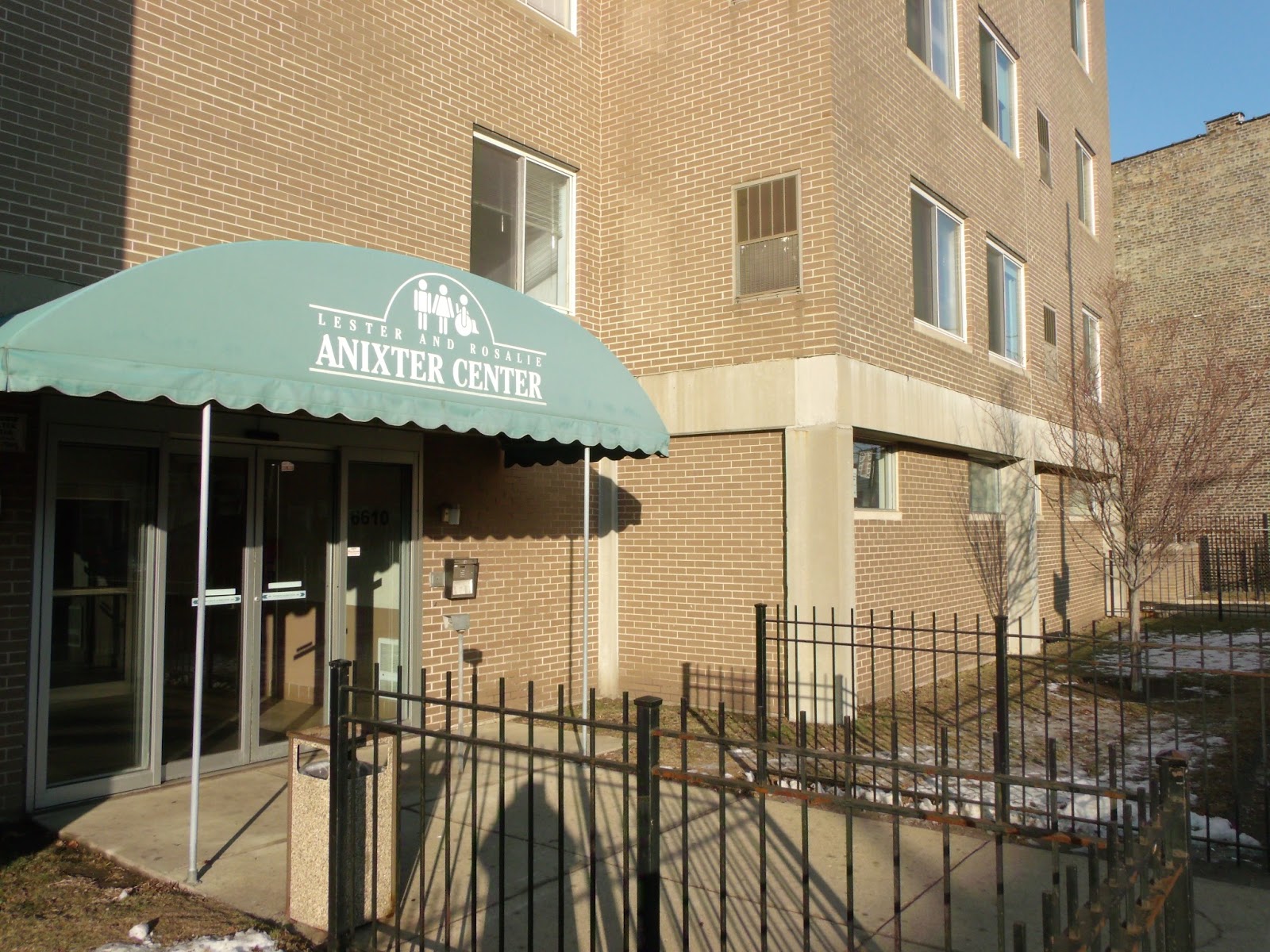
[photo: Homes like the Anixter Center in Rogers Park will be able to apply for help subsidizing the housing for the disabled. Jonathan Greig/MEDILL]

Very few groups face the same problems the disabled and mentally challenged face when it comes to finding housing, but relief may be on the way.

Gov. Pat Quinn announced on Tuesday that Illinois has received an almost $12 million grant from the U.S Department of Housing and Urban Development to help cover the cost of low income housing for the disabled and mentally challenged.

On their website, HUD says that through the Section 811 Supportive Housing for Persons with Disabilities program, HUD will “provide funding to develop and subsidize rental housing with the availability of supportive services for very low-income adults with disabilities.”

The grant will allow the state to subsidize more than 800 apartments for the next five years, with an option to extend the agreement for up to 20 years. Gov. Quinn said in a press release Tuesday that the housing was reserved for tenants who are, “extremely low income, which is defined as making up to 30 percent of the median income for the area – or $15,480 in the Chicago area.”

Mary R. Kenney, executive director of the Illinois Housing Development Authority, said, “Illinois can continue to eliminate barriers to safe and decent housing opportunities for our most vulnerable residents and help them access the resources and skills that will improve their quality of life.”

With two big facilities for the disabled closing in the last two years, lawmakers are pivoting from the old-fashioned, institutional models of assisted living to more community-based resources for those in need.

“We’re committed to making sure all our citizens – regardless of the challenges they face - have the opportunity to reach their full potential,” Gov. Quinn said. “These resources will not only help us provide a home for people who need one, but also the skills, training, counseling and services they need to become productive members of their communities.”

Many of the disabled are forced to live solely off of Social Security Disability Insurance, which is nowhere near enough to cover even the lowest rents in the city, leaving many with no options but shelters or the street.

HUD deputy secretary Maurice Jones praised the Illinois application, saying and said their program is looking “to solve real problems and offer real and lasting solutions for persons who might otherwise be institutionalized or living on our streets.”

The IHDA will be accepting applications from housing providers buildings until the fall of 2013 through a multilayered application process. They will then use existing disability networks to set up housing for those in need.

After an extremely competitive application process, Illinois’s grant was the third largest awarded in the nation.

###
Article BY JONATHAN GREIG ; Medill Reports ; FEB 13, 2013
http://news.medill.northwestern.edu/chicago/news.aspx?id=215814
©2001 - 2013 Medill Reports - Chicago, Northwestern University. A publication of the Medill School.

TRAVELERS WITH DISABILITIES : City of Chicago visitors information

Chicago was voted one of America's most disability-friendly cities by the National Organization on Disability, Chicago is accessible for visitors with special needs.

Here are some resources:
The Mayor's Office for People with Disabilities provides information on accessibility at the city's many lakefront festivals, wheelchair accessible taxicabs, renting hand cycles, and much more. http://www.cityofchicago.org/city/en/depts/mopd.html

Deaf Communication by Innovation provides qualified sign language interpreters / translators for travelers.
http://www.cityofchicago.org/city/en/depts/mopd/provdrs/deaf_and_hard_ofhearingservices.html

Chicago's Regional Transportation Authority (312.836.7000; TTY: 312.836.4949) provides accessibility services and resources for CTA bus/rail, Metra commuter rail and PACE suburban bus services & Paratransit services.
http://www.rtachicago.com/accessibility/accessibility.html

PACE suburban bus services & Paratransit services for Chicago area.
http://www.pacebus.com/sub/paratransit/sd_ada_chicago.asp

Chicago's Taxi Access Program (800-281-4466) is the dispatch service for more than 20 taxicab companies which operate wheelchair accessible minivans equipped with ramps, wheelchair securements, and shoulder seat belts.
http://www.pacebus.com/sub/paratransit/TAP.asp
http://www.cityofchicago.org/city/en/depts/bacp/supp_info/passenger_information.html


Easy Access Chicago (773.388.8839) offers comprehensive accessibility information more than 100 top attractions, transportation, O'Hare / Midway airports, hotel, restaurants, and more. You'll also find listings of accessible tours and key disability services. You can also download the guide now.
http://www.choosechicago.com/includes/content/docs/media/CITY_ACCESS_Low_Rez.pdf

# As a side-note, the above are great references, but also contact your hotels, museums, entertainment venues, restaurants, Disability Agencies, etc. for more up to date information...

Justice Department Reaches Settlement with Virginia Dental Office to Stop HIV Discrimination | Feb 2013

Press Release February 12, 2013
U.S. Department of Justice
Office of Public Affairs


The Justice Department announced today that, as part of its Barrier-Free Health Care Initiative , it has reached a settlement with Woodlawn Family Dentistry, of Alexandria, Va., under the Americans with Disabilities Act (ADA). This is the third settlement addressing HIV discrimination by a medical provider reached by the Justice Department in three weeks.

The Justice Department found that Woodlawn Family Dentistry required a patient with HIV to schedule all future appointments as the last appointment of the day. The department determined that, because the patient has HIV, Woodlawn failed to offer him the same options and availability in scheduling future appointments as it offered to other people. The department further determined that there was no lawful reason why Woodlawn could not treat the patient at any time during normal business hours.

“Ensuring that people with HIV are treated equally and with dignity is critical, especially in the medical field,” said Thomas E. Perez, Assistant Attorney General for the Civil Rights Division. “The ADA does not tolerate this type of discrimination and neither will the Justice Department.”

Under the settlement, Woodlawn must pay $7,000 to the patient and $3,000 in civil penalties. In addition, Woodlawn must train its staff on the ADA and develop and implement an anti-discrimination policy.

In the past two weeks, the department announced similar agreements with the Fayetteville Pain Center and the Castlewood Treatment Center to address HIV discrimination. All three settlements are part of the Department of Justice’s Barrier-Free Health Care Initiative, a partnership of the Civil Rights Division and U.S. Attorney’s offices across the nation, to target enforcement efforts on a critical area for individuals with disabilities. The initiative, launched on the 22nd anniversary of the ADA in July 2012, includes the participation of 40 U.S. Attorney’s offices. The division expects the initiative to address access to health care for people with HIV and those with hearing disabilities, as well as physical access to medical facilities. In 2012, the division and U.S. Attorneys offices reached two settlement agreements regarding access to medical care for people with HIV and four settlements regarding access to medical care for people with hearing disabilities. For more information on the Barrier Free Health Care Initiative visit www.ada.gov/usao-agreements.htm .

For more information on the ADA and HIV visit www.ada.gov/aids . Those interested in finding out more about these settlements or the obligations of public accommodations under the ADA may call the Justice Department’s toll-free ADA information line at 800-514-0301 or 800-514-0383 (TDD), or access its ADA website at www.ada.gov . ADA complaints may be filed by email to ada.complaint@usdoj.gov .

http://www.justice.gov/opa/pr/2013/February/13-crt-187.html

U.S. Access Board Advisory Committee on Medical Diagnostic Equipment to Meet February 26 & 27 , 2013

The Access Board’s Medical Diagnostic Equipment Accessibility Standards Advisory Committee will hold its next meeting February 26 and 27 in Washington, D.C.

Further details are posted on the Board’s website. For more information, contact Rex Pace at pace@access-board.gov, (202) 272-0023 (v), or (202) 272-0052 (TTY). Committee meetings are open to the public. Members of the public can follow the proceedings remotely through a toll-free conference line and online real-time transcription.

MDE Accessibility Standards Advisory Committee Meeting
February 26 and 27
Access Board Conference Center
1331 F Street, NW, Suite 800
Washington, D.C.
Note: For the comfort of all participants and to promote a fragrance-free environment, attendees are requested not to use perfume, cologne, or other fragrances.

Call-in option (listening only):
Dial: (517) 308-9365 or (888) 603-7094 (toll-free)
Passcode: 6317703

Real-time transcription:
[The link will be posted on the MDE homepage]

For the Access Board’s Medical Diagnostic Equipment webpage : http://www.access-board.gov/medical-equipment.htm

U.S. Access Board to Form Advisory Committee on Update of Rail Vehicle Guidelines | Feb 2013

The Access Board is organizing an advisory committee to assist in the review and update of its ADA Accessibility Guidelines for Transportation Vehicles and seeks nominations for membership. The Rail Vehicles Access Advisory Committee will develop consensus recommendations for the Board’s use in updating sections of the guidelines that cover vehicles of fixed guideway systems, including rapid, light, commuter, intercity, and high speed rail. The committee’s work will not extend to portions of the guidelines that address buses and vans which the Board is already in the process of updating.

The Board seeks to include representatives from rail vehicle manufacturers, transit providers, disability groups, and other stakeholders and interested parties on the committee. The committee will be balanced in terms of interests represented. A notice issued by the Board provides further details, including application instructions. The deadline for applications is April 1.

Meetings of the advisory committee will be open to the public and will provide opportunities for all interested parties to provide information. Its work will be conducted in accordance with regulations governing Federal advisory committees. Committee membership is voluntary, and members will not be paid or reimbursed for their services.

For further information, visit the Board’s website or contact Paul Beatty at rvaac@access-board.gov, (202) 272-0012 (voice), or (202) 272-0072 (TTY).

For the U.S. Access Board visit: http://www.access-board.gov/

HUD AND HHS PARTNER TO PROVIDE PERMANENT HOUSING AND SERVICES TO LOW-INCOME PEOPLE WITH DISABILITIES | Feb 2013

$98 million in rental assistance will prevent homelessness and unnecessary institutionalization

WASHINGTON – To prevent thousands of people with disabilities from experiencing homelessness or unnecessary institutionalization, the U.S. Department of Housing and Urban Development (HUD) and the U.S. Department of Health and Human Services (HHS) today announced nearly $98 million in funding for 13 state housing agencies for rental assistance to extremely low-income persons with disabilities, many of whom are transitioning out of institutional settings or are at high risk of homelessness.

HUD’s support of these state agencies is made possible through the Section 811 Project Rental Assistance Demonstration Program (PRA Demo) which enables persons with disabilities who earn less than 30 percent of median income to live in integrated mainstream settings. The state housing agencies are working closely with their state Medicaid and Health and Human Service counterparts to identify, refer, and conduct outreach to persons with disabilities who require long-term services and supports to live independently.

“By working together, HUD and HHS are helping states to offer permanent housing and critically needed supportive services to offer real and lasting assistance to persons who might otherwise be institutionalized or living on our streets,” said HUD Secretary Shaun Donovan. “We’re helping states reduce health care costs, improving quality of life for persons with disabilities, and ending homelessness as we know it.”

“Our nation is strongest when all our citizens are able to fully participate and contribute,” said HHS Secretary Kathleen Sebelius. “This unique collaboration of federal and state agencies will enable thousands of Americans with disabilities to lead productive, meaningful lives in their communities.”

Today’s announcement reinforces the guiding principles of the Americans with Disabilities Act and the landmark 1999 Supreme Court ruling in Olmstead v. L.C., which require state and local governments to provide services in the most integrated settings appropriate to meet the needs of individuals with disabilities.

The rental assistance announced today also supports the Obama Administration’s long term strategy to prevent and end homelessness. The Dedicating Opportunities to End Homelessness (DOEH) Initiative is a joint effort by HUD and the U.S. Interagency Council on Homelessness (USICH) designed to help communities match their homeless supports with other mainstream resources such as housing choice vouchers, public housing, private multifamily housing units, and other federally funded services. The initiative is beginning in 10 critically important communities: Atlanta, Chicago, Fresno County, Los Angeles County, Houston, New Orleans, Philadelphia, Phoenix/Maricopa County, Seattle, and Tampa.

For a detailed list of States, Amount of subsidies, visit : http://www.hhs.gov/news/press/2013pres/02/20130212b.html

Authorized under the Frank Melville Supportive Housing Investment Act of 2010, HUD’s Section 811 Project Rental Assistance Demonstration Program provides funding to states for project-based rental assistance to develop permanent affordable housing options in integrated settings for extremely low-income persons with disabilities. Under the state health care/housing agency partnership, each state has in place a policy for referrals, tenant selection, and service delivery to ensure that this housing is targeted to those persons with disabilities most in need of affordable housing with supportive services.

###
Press Release February 12, 2013 # http://www.hhs.gov/news/press/2013pres/02/20130212b.html

Note: All HHS press releases, fact sheets and other press materials are available at http://www.hhs.gov/news.

You can follow HHS on Twitter @HHSgov and sign up for HHS Email Updates.

Wednesday, February 13, 2013

U.S. Access Board Issues Supplemental Rule to Address Access to Shared Use Paths | Feb 2013

The Access Board has released for public comment proposed requirements for accessible shared use paths used by pedestrians, bicyclists, and others for transportation or recreation. These requirements would supplement guidelines the Board is developing for public rights-of-way that were previously made available for comment.

The proposed rights-of-way guidelines, which cover access to sidewalks, streets, and other pedestrian facilities, provide requirements for pedestrian access routes, including specifications for route width, grade, cross slope, surfaces, and other features. The Board’s proposal would apply these and other relevant requirements to shared use paths as well. It also would add new provisions tailored to shared use paths that address grade, cross slope, surfaces, and protruding objects. One provision, for example, specifies that the grade of shared use paths not exceed 5% or, if contained within a street or highway right-of-way, the general grade of adjacent street or highway but includes an exception where constraints imposed by terrain, infrastructure, or other factors make compliance impracticable. In addition, curb ramps and blended transitions located along shared use paths would be required to extend the full path width.

This supplemental rule is responsive to feedback the Board received from the public on its proposed rights-of-way guidelines as well as on separate guidelines it is developing for trails and outdoor developed areas. Comments from the public on these rules urged the Board to specifically address access to shared use paths since they are distinct from sidewalks and trails. Shared use paths, unlike most sidewalks, are physically separated from streets by an open space or barrier. They also differ from trails because they are designed not just for recreation purposes but for transportation as well. In addition, the Board invited comment on this subject in an earlier notice.

The proposed supplemental provisions on shared use paths are further described in a published notice which includes instructions for submitting comment. The deadline for comments is May 14, 2013. For further information, visit the Board’s website or contact Scott Windley at row@access-board.gov , (202) 272-0025 (voice), or (202) 272-0028 (TTY).

Please visit "rights-of-way" webpage at : http://www.access-board.gov/prowac/index.htm

Tuesday, February 12, 2013

Federal Award Will Help People with Disabilities Access Affordable Rental Housing in Communities Across Illinois | Feb 2013

Press Release February 12, 2013
State of Illinois

Governor Quinn Announces Federal $12 Million HUD Award to Advance Supportive Housing Efforts in Illinois
Federal Award Will Help People with Disabilities Access Affordable Rental Housing in Communities Across Illinois

CHICAGO - February 12, 2013. Governor Pat Quinn was joined today by representatives from the U.S. Department of Housing and Urban Development (HUD) to announce an $11.98 million award that will strengthen Illinois’ efforts to allow people with disabilities to live independently in the community of their choice. The award will make up to 825 apartments affordable for people who have special needs, and are in financial need, across the state. HUD officials awarded the grant under the Section 811 Supportive Housing for Persons with Disabilities program.

Today’s announcement builds on Governor Quinn’s commitment to improve the lives of people with developmental disabilities and mental health challenges in Illinois.

“Investing in people is the most important thing we can do,” Governor Pat Quinn said. “We’re committed to making sure all our citizens – regardless of the challenges they face - have the opportunity to reach their full potential. These resources will not only help us provide a home for people who need one, but also the skills training, counseling and services they need to become productive members of their communities.”

Under Governor Quinn’s leadership, Illinois has made historic progress to rebalance its housing and care for people with disabilities, moving away from an overreliance on outdated institutions and moving towards a community-based care model. The governor closed two institutions in the last two years and invested more resources into housing and community services.

The state has also committed significant resources to building permanent supportive housing units. However, many persons with special needs still cannot access housing because their only source of income, Supplemental Security Income or Social Security Disability Insurance, is not enough for most affordable rental housing. Housing only becomes accessible to people with disabilities who are low-income when rental subsidies are provided. The HUD award announced today bridges the gap between the required rental amount and what extremely low-income tenants can pay.

“Two federal agencies are working together to solve real problems and offer real and lasting solutions for persons who might otherwise be institutionalized or living on our streets,” HUD Deputy Secretary Maurice Jones said. “Governor Quinn and our Illinois partners will use this money to help reduce health care costs, and improve quality of life for more than 800 persons with disabilities."

HUD hosted a competitive application process for the Section 811 awards and the Illinois Housing Development Authority (IHDA), the state’s housing finance agency, received the third-largest award in the country.

“Through a combination of local, state, and federal efforts, Illinois is providing vital supportive services to some of the most vulnerable members of our communities,” Senator Dick Durbin (D-IL) said. The federal funding announced today will give low-income Illinoisans with disabilities real options for affordable, accessible community-based living. I commend Governor Quinn and the Illinois Housing Development Authority for putting together such a strong application for this important competitive grant.”

IHDA will award the rental subsidy to owners of eligible properties via one or more competitive application rounds. Each rental subsidy awarded will have an initial term of five years with renewals for up to 20 years. The State Referral Network will link potential tenants to participating property owners. To qualify, potential tenants must be extremely low income, which is defined as making up to 30 percent of the median income for the area – or $15,480 in the Chicago area or $14,130 in Springfield, for a one-person household.

“Governor Quinn has recognized the need to create more community-based housing opportunities for people with special needs and he has dedicated significant resources to meeting that need,” IHDA Executive Director Mary R. Kenney said. “Thanks to this new federal resource, Illinois can continue to eliminate barriers to safe and decent housing opportunities for our most vulnerable residents and help them access the resources and skills that will improve their quality of life.”

Under Governor Quinn’s leadership, $94 million was committed to the creation of 525 units of supportive housing in 2012. This investment added to $36 million invested in 2011 for 193 units. Also in 2012, Governor Quinn signed a new law to enable landlords providing supportive housing units to apply for rental subsidy under the state’s Rental Housing Support Program. The program is funded through a $10 fee collected from real estate document recordings.

More information will be available at www.ihda.org when IHDA begins accepting program applications later this year.

### http://www3.illinois.gov/PressReleases/ShowPressRelease.cfm?SubjectID=2&RecNum=10918